Prevention beats remediation
Cleaning up mold is far more expensive than keeping it from growing. In Richmond, where the moisture is relentless through the summer, a little year-round attention to the crawl space and lower level saves most homeowners a big remediation bill. Here's the local playbook.
Control the crawl space first
Since the crawl space is where most Richmond mold begins, it's where prevention pays off most:
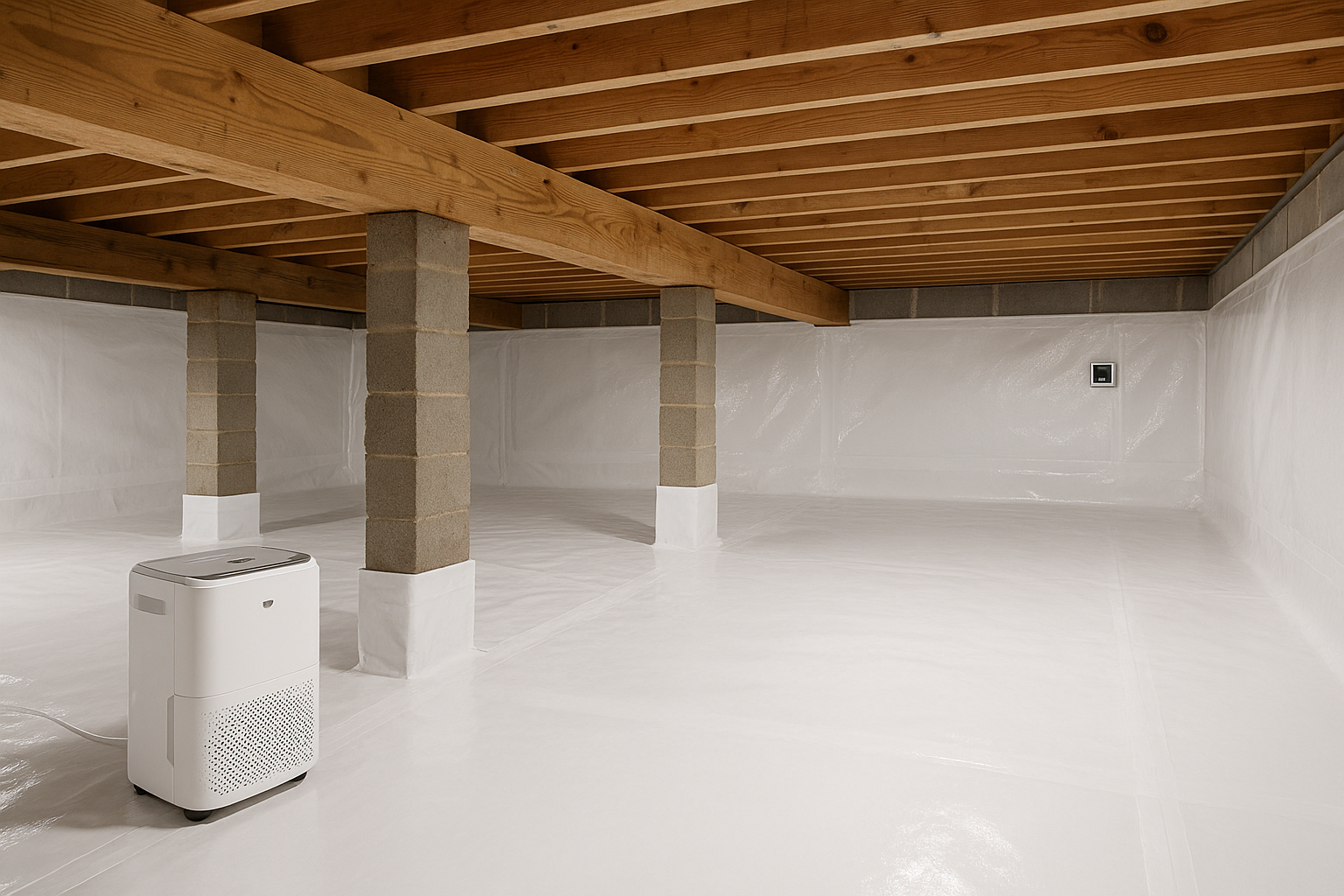
- Seal it, don't vent it. In this climate, open crawl-space vents let humid summer air in. Encapsulation — a heavy sealed vapor barrier over the floor and walls, with the vents closed — is the gold standard.
- Add a dehumidifier. A crawl-space dehumidifier holds humidity in the safe range through the summer. Aim to keep relative humidity below about 55%.
- Keep water out. Make sure the ground slopes away from the foundation and that downspouts carry roof water well clear of the house.
Manage humidity in the living space
Keep indoor humidity between roughly 30 and 50%. Run air conditioning through the humid months — it dehumidifies as it cools — and consider a whole-home or portable dehumidifier for damp lower levels. A cheap hygrometer (humidity gauge) in the basement or lowest level tells you when you're drifting into mold territory.
Fix water before it sits
- Roof and gutters: clear gutters (especially under Richmond's heavy tree canopy), and make sure downspouts extend several feet from the foundation.
- Grading: soil should slope away from the house on all sides; clay that's settled toward the foundation funnels water down the wall.
- Plumbing: fix drips under sinks, around toilets, and at supply lines quickly — a slow leak feeds mold for months unseen.
- Appliances: check washing-machine hoses, water heaters, and AC condensate lines, which clog and overflow.
Ventilate the wet rooms
Run bathroom exhaust fans during and after every shower, and make sure they vent outside, not into the attic — a hugely common Richmond problem. Use the range hood when cooking. In closets and against exterior walls on the north side of the house, leave a little air gap behind furniture so surfaces can dry.
A Richmond seasonal checklist
- Spring: clear gutters, check grading after winter, and inspect the crawl space before the humidity ramps up.
- Summer: run AC and crawl-space dehumidification, watch indoor humidity, and stay alert after heavy storms.
- Fall: clear the leaf load from gutters, and check the crawl space again before closing up for winter.
- Winter: watch for plumbing leaks and condensation; the mild, damp Richmond winter still grows mold slowly.
Prevention for older Richmond homes
If you own one of Richmond's historic homes — a Fan rowhouse, a Church Hill Victorian, a Northside bungalow — a few extra habits pay off. Old masonry foundations wick groundwater, so keeping soil graded away and downspouts extended well clear of the wall matters even more than in newer construction. Watch below-grade rooms and English basements for condensation through the summer, and don't seal a finished lower level tight without a plan to control its humidity, or you'll trap moisture behind the finishes. In homes with hand-dug cellars or rubble foundations, a professional interior drainage system and dehumidification is often the only thing that truly keeps them dry, because you can't easily waterproof porous old stone from the outside.
Small habits that add up
- Store smart. Keep boxes and belongings off the crawl-space or basement floor and away from exterior walls so air can move and nothing sits against damp surfaces.
- Watch the AC condensate. Check that your air handler's drain line is clear each summer — a clogged line quietly dumps water where the unit sits.
- Act on smells immediately. A new musty note is your earliest warning. Chasing it down the week you notice it is far cheaper than waiting for a stain to appear.
- Keep an eye after storms. Central Virginia's heavy summer storms and tropical remnants are when crawl spaces flood; a quick check after a big rain catches problems early.
When to call a pro
If your crawl space already smells musty, has visible mold, or reads high on a humidity gauge, prevention has become remediation — and it's worth getting it assessed before it spreads upstairs. A licensed local pro can clean, dry, and encapsulate the space so prevention actually holds. Request a free quote or call (804) 292-2499.