
The clock starts immediately
Richmond knows flooding — from Hurricane Agnes and Camille to Tropical Storm Gaston's flash floods to the storms that still push water into low-lying homes and creek-side lots every few years. Whatever the source, the response is the same, and it's time-critical: mold can begin growing on wet materials within 24 to 48 hours. What you do in the first two days largely determines whether you face a drying bill or a full mold remediation.
First: safety
- Electricity: don't enter standing water if there's any chance it's in contact with outlets or the electrical panel. Shut off power to affected areas only if you can do so safely, or wait for a professional.
- Water type: treat flood water from a river, storm, or sewer backup as contaminated ("black water"). Wear boots and gloves, avoid skin contact, and keep children and pets out.
- Structural and gas: watch for sagging ceilings and, if you smell gas, leave and call the utility.
Next: document, then dry
Before you move much, photograph and video everything for insurance — the standing water, the damaged rooms, the belongings. Then start removing water and drying fast:
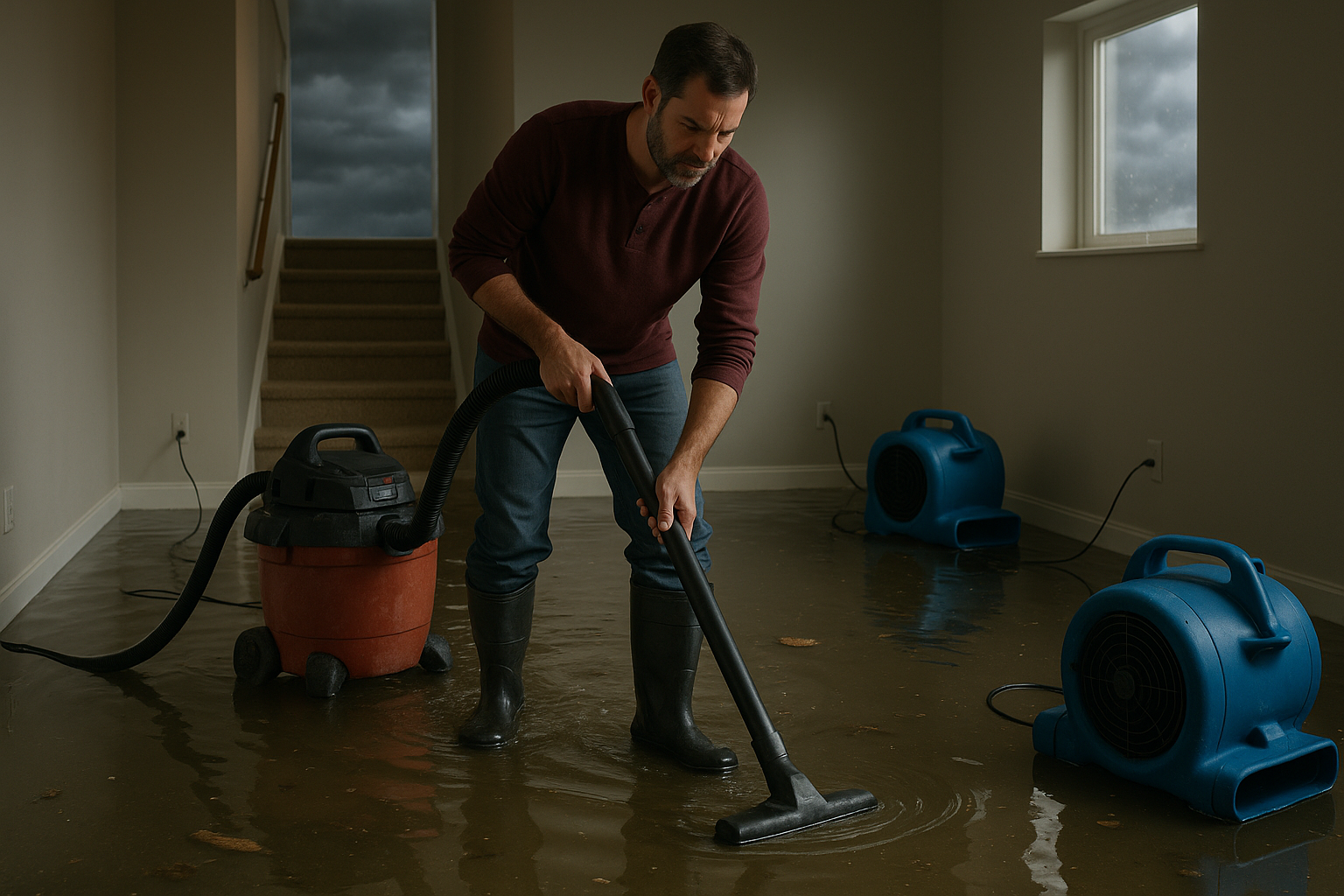
- Get the water out. Pump or wet-vac standing water as soon as it's safe.
- Remove wet porous items. Soaked carpet and pad, wet cardboard, and saturated furniture hold water and grow mold quickly — get them out.
- Open up wet cavities. Drywall wicks water upward; it often has to be cut above the water line so the wall cavity can dry.
- Move air. Fans and open windows help a little, but real structural drying needs commercial air movers and dehumidifiers.
Why professional drying matters
Household fans can't remove the volume of moisture a flood leaves in framing, subfloor, and wall cavities, and materials that feel dry on the surface are often still saturated inside — exactly where mold starts. A water-damage crew brings truck-mounted extraction and commercial dehumidification, and verifies dryness with moisture meters rather than by feel. In Richmond's humidity, that difference is often what decides whether mold takes hold. See our flood and water-damage response page for how the work runs.
If mold has already started
If the water sat for more than a day or two before drying began — common when a home floods while you're away — assume mold may already be growing, and don't disturb it. At that point the job moves from drying into remediation: containment, removal, HEPA filtration, and clearance testing. Getting a pro in quickly keeps it from spreading further.
What to save and what to let go
In the rush after a flood it helps to know in advance what's usually salvageable and what isn't. Solid wood furniture, metal, glass, and sealed hard surfaces can typically be cleaned and dried. Structural framing and subfloor can often be dried in place if the work starts fast. What usually can't be saved once soaked — especially by contaminated storm or river water — are carpet padding, mattresses, upholstered furniture, particle-board and pressed-wood furniture, wet insulation, and paper goods, because they hold water and grow mold faster than they can be dried. When in doubt, a water-damage pro can advise item by item, but erring toward removing saturated porous materials quickly is the safer instinct.
Richmond-specific hazards
A few local realities are worth keeping in mind. Flash flooding here often carries mud and creek debris, which means contaminated water even away from the river. Older homes in the historic districts may have below-grade spaces and crawl spaces that fill and are slow to pump out, hiding water under the living floor. And the humidity that follows a summer storm works against you — the air itself is so moist that natural drying barely happens, making mechanical dehumidification essential rather than optional. All of this argues for getting professional drying equipment on site quickly rather than trusting open windows and box fans in Richmond's climate.
Insurance realities
Standard homeowners policies often cover sudden internal water (a burst pipe) but exclude rising flood water from a river or storm, which requires separate flood insurance. Mold coverage is frequently capped or limited. Document everything and read our Virginia insurance guide before you file. When in doubt, call for help fast — (804) 292-2499.