
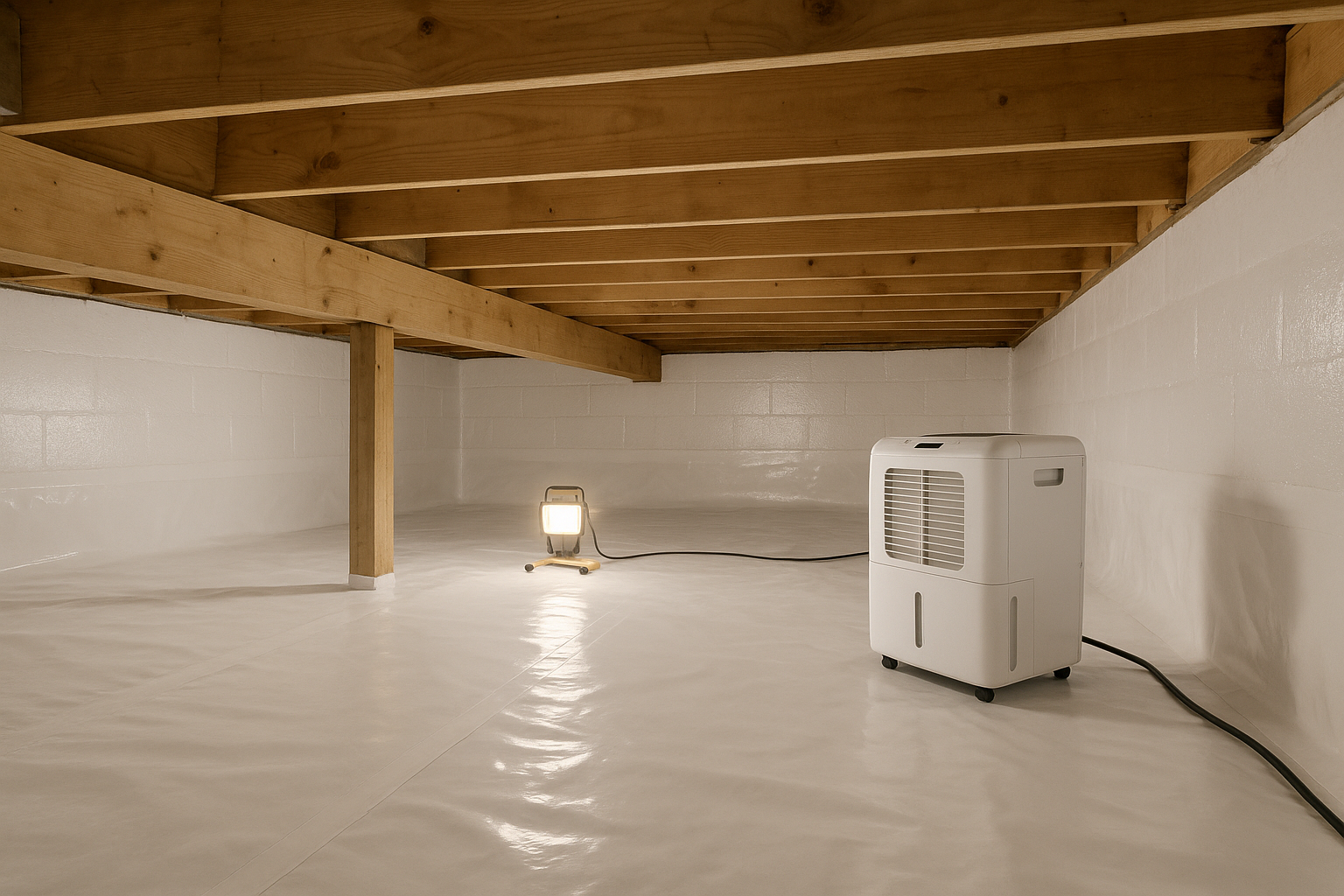
Why Richmond crawl spaces are ground zero for mold
Most homes across Richmond, Henrico, Chesterfield, and Hanover sit over a vented dirt or block crawl space. For decades the standard was to put open vents in the foundation walls on the theory that outside air would keep the space dry. In Central Virginia's climate, that theory backfires. From May through September, the outdoor air is warm and loaded with moisture. It flows through those vents, hits the cool surfaces under your house — joists, ducts, subfloor — and condenses, exactly like sweat on a cold drink. Meanwhile the region's dense clay soil holds rainwater and releases vapor upward through the exposed dirt floor all year.
The result is a crawl space that sits at 70, 80, even 90% relative humidity for months. Wood needs only sustained dampness to grow mold, and the framing of your house is right there in it. Left alone, that moisture rots band joists and subfloor, ruins insulation, draws in pests, and — because of the stack effect, where air rises through the house and pulls replacement air up from below — sends musty, spore-laden air straight into the rooms you live in. A large share of "upstairs" air quality problems in Richmond homes actually originate under the floor.
Cleanup and remediation first
Encapsulation is not something you install on top of a mold problem — the mold has to go first. A proper job starts with removing wet, moldy insulation and any old, torn plastic; HEPA-vacuuming and treating the joists and subfloor; and, if there's standing water, correcting the drainage that's letting it in. Only once the space is clean and dry does the encapsulation system go in.
What encapsulation actually is
Encapsulation seals the crawl space off from the ground and the outside air so it can finally stay dry:
- Heavy vapor barrier. A thick, reinforced liner covers the dirt floor and runs up the foundation walls, sealed at the seams and piers, so ground moisture can't get in.
- Sealed vents. The old foundation vents are closed, cutting off the humid summer air that was the main problem.
- Dehumidification. A crawl-space dehumidifier sized for the space holds relative humidity in the safe 50-something range year-round.
- Drainage where needed. If groundwater intrudes, a drain and small sump handle it before it can pool.
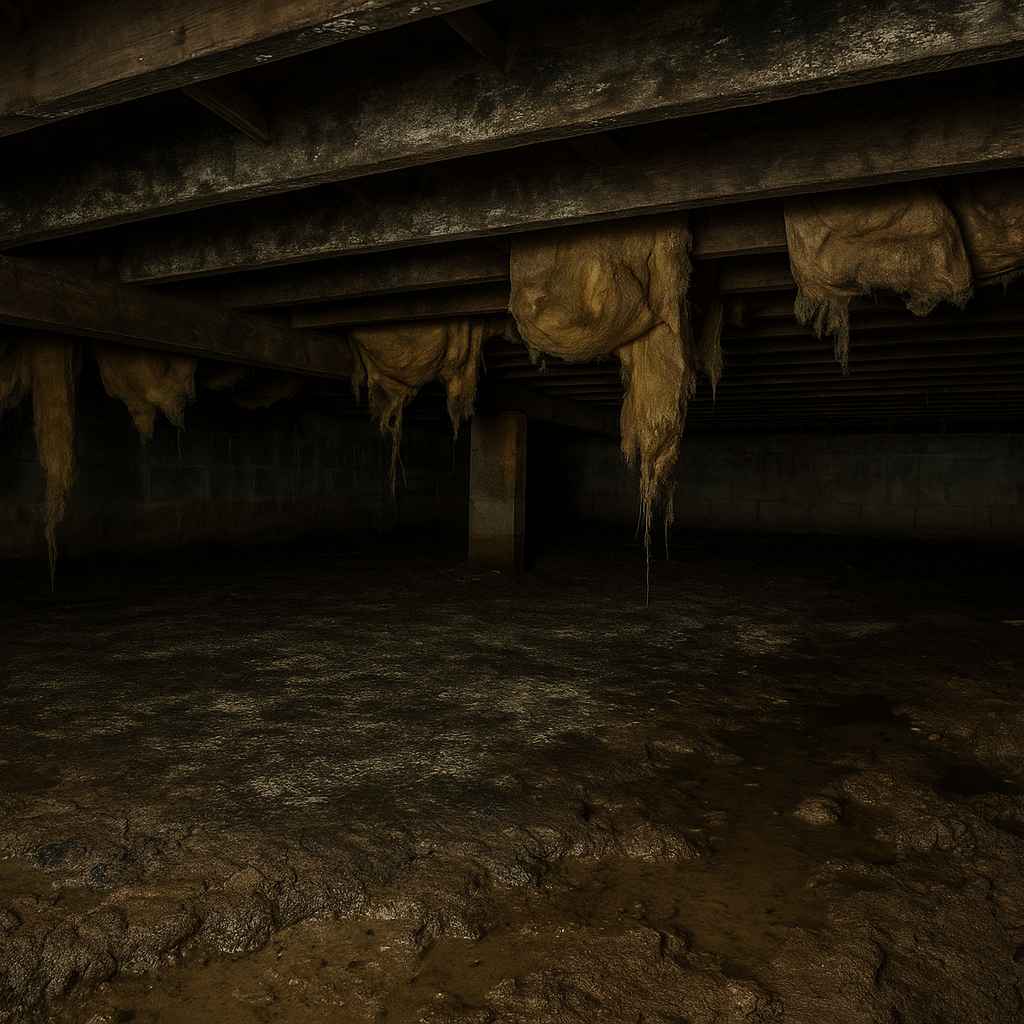
The problem found
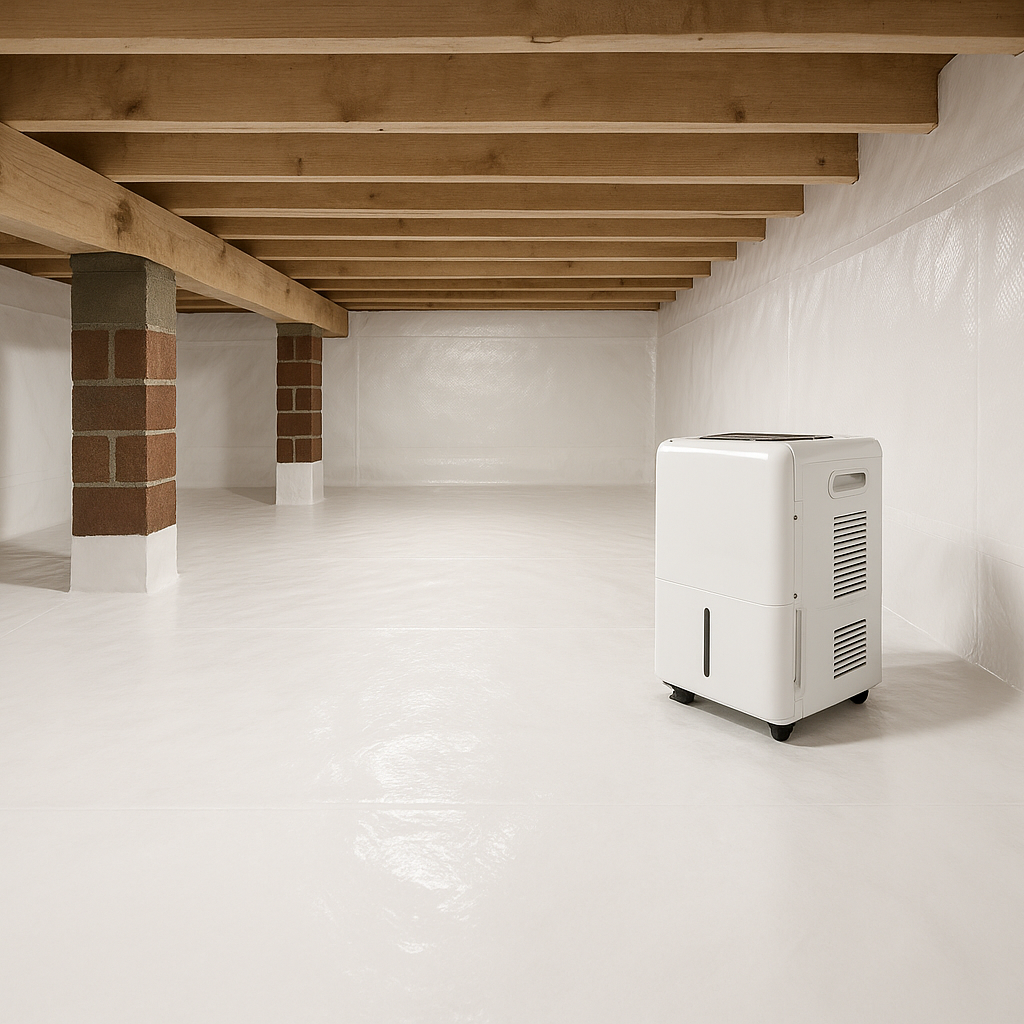
After remediation
What it does for the rest of the house
A sealed, dry crawl space pays off above the floor too. Because your HVAC no longer has to fight moisture rising from below, the system runs more efficiently through Richmond's long cooling season, and the air upstairs stops smelling like the space under the house. Floors feel less clammy, hardwoods and doors move less with the seasons, and the framing that holds your house up stops slowly rotting. It's one of the highest-value moisture fixes a Central Virginia homeowner can make.
A whole-region problem
We see the same pattern everywhere from the historic homes of the Church Hill and the Fan to the newer subdivisions of Short Pump, Glen Allen, and Midlothian. The housing eras differ, but the clay soil and the humidity don't. If your home has a crawl space in Central Virginia, it's worth knowing what the humidity down there is doing.