
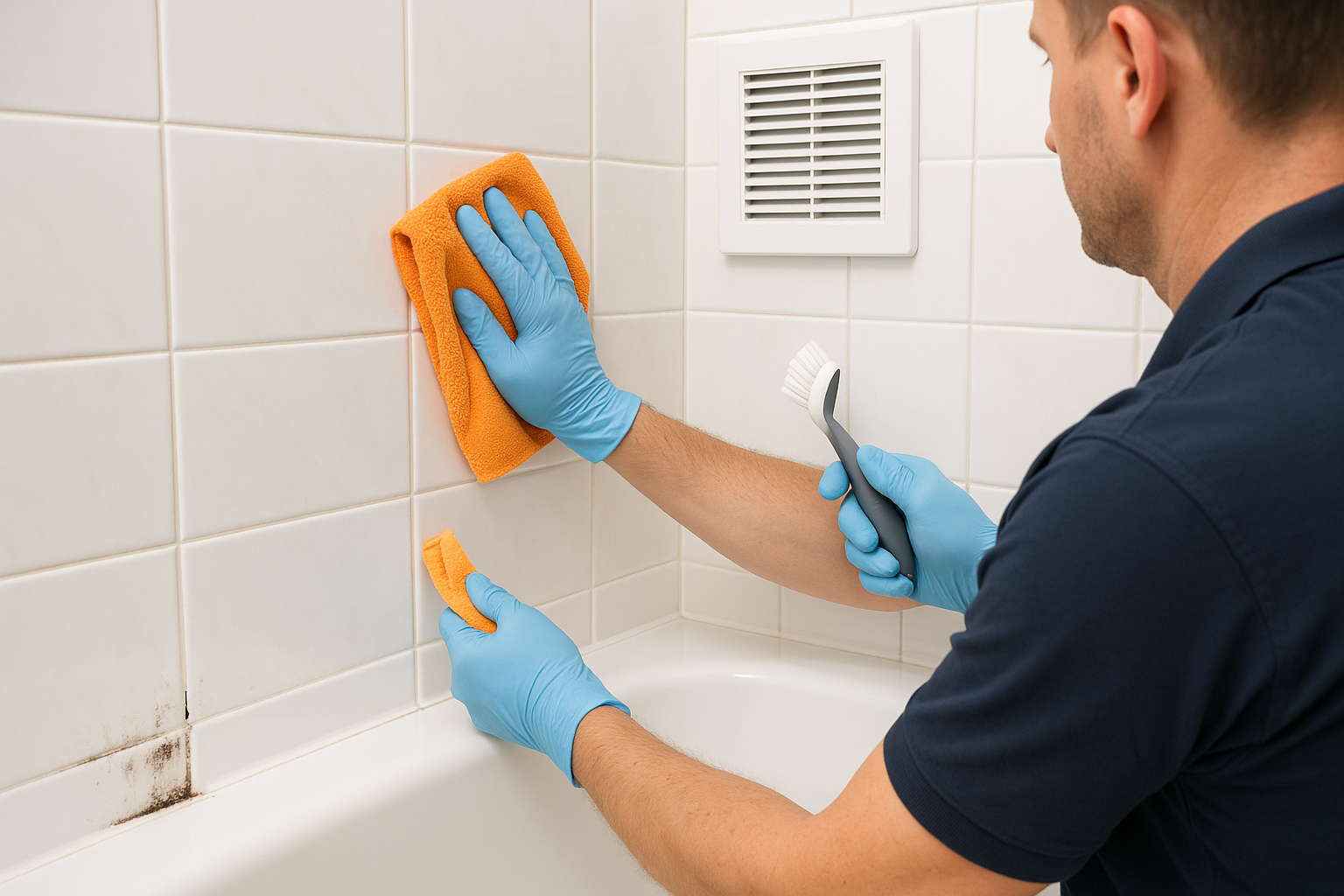
Why bathrooms and kitchens grow mold here
Every hot shower and boiling pot puts moisture into the air. In a well-ventilated room that moisture leaves quickly; in a Richmond bathroom during a humid summer, when the outdoor air is already saturated and the exhaust fan is weak or vents into the attic, it lingers and settles on every cool surface. Grout, caulk, painted drywall, and window frames stay damp long enough to grow the black and pink films everyone recognizes. In older homes in the Fan, the Museum District, and Church Hill — where bathrooms were often carved out of former closets and tucked against exterior walls — the problem is even more common.
The mold you can see is rarely the whole story. Recurring bathroom mold usually points to moisture getting somewhere it shouldn't: a failed wax ring or supply line under the toilet, water wicking behind tile from a cracked grout line, a slow drip inside the vanity, or condensation inside the wall. Clean the surface without finding that source and it's back within weeks.
What professional removal covers
- Surface remediation. Mold on grout, caulk, and painted surfaces is cleaned and treated; failed caulk and grout are removed and replaced rather than painted over.
- Finding the hidden source. A pro checks for leaks under and behind fixtures, moisture inside walls, and any subfloor or under-tub growth that's feeding the visible problem.
- Removing damaged material. Where drywall, backer board, or subfloor is soft and mold-damaged — often around tubs and toilets — it's cut out and replaced.
- Fixing ventilation. A properly sized exhaust fan that actually vents outdoors is the single most effective long-term fix for a Richmond bathroom.
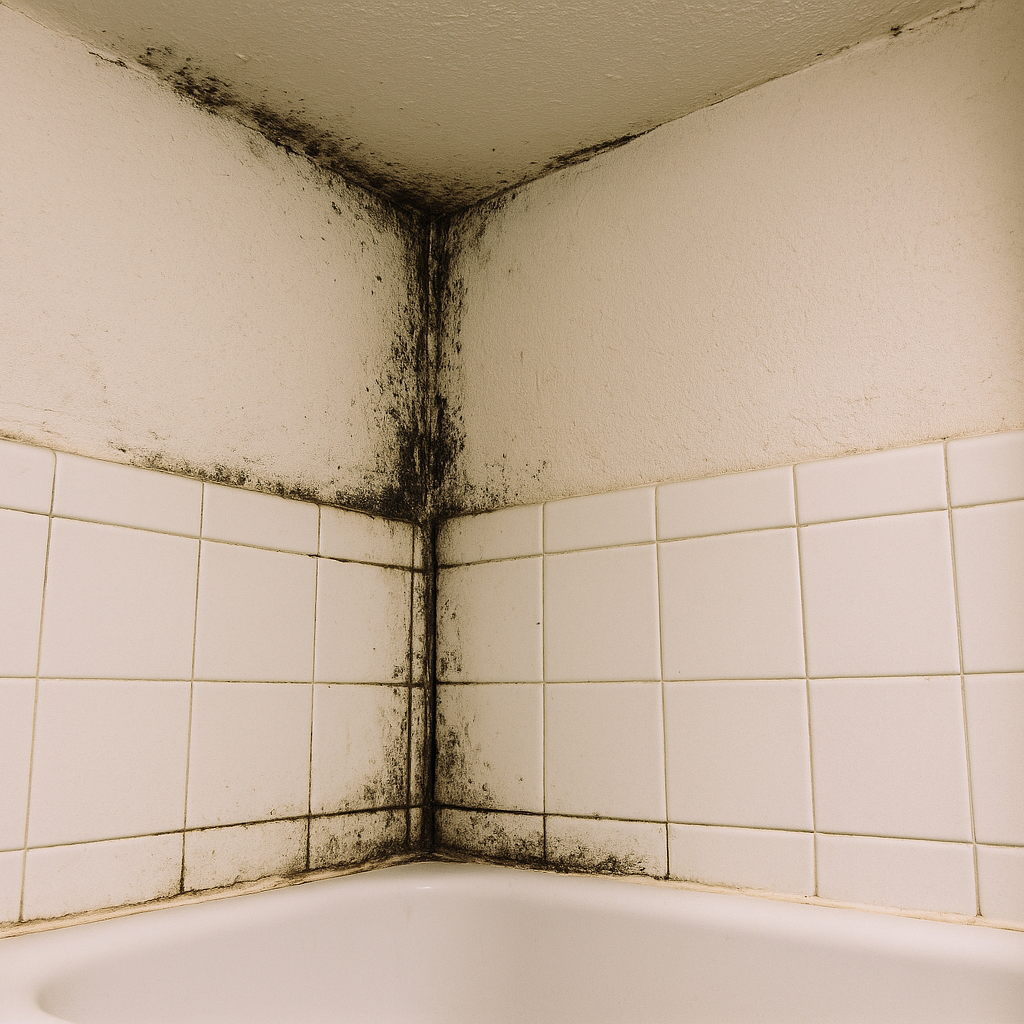
The problem found
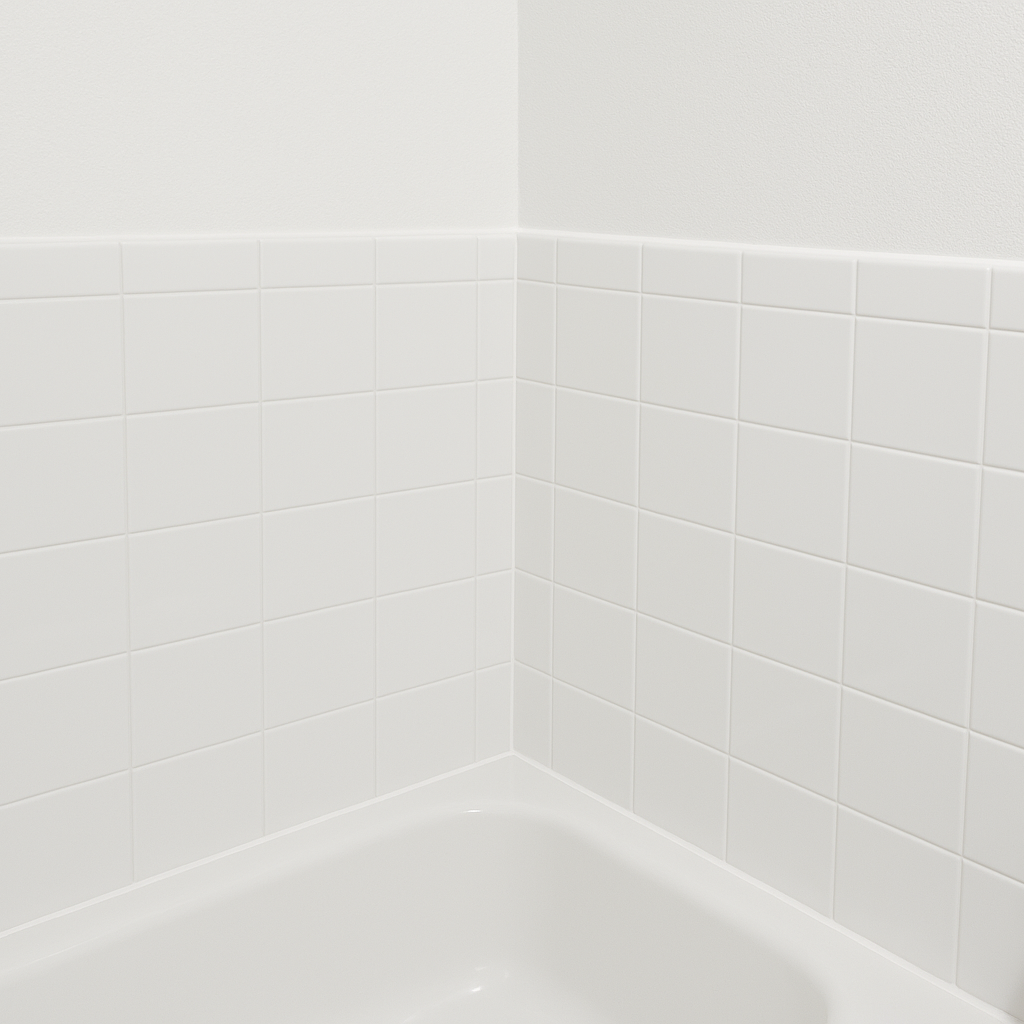
After remediation
When it's bigger than the surface
If the drywall around your tub feels soft, the floor by the toilet flexes, or there's a musty smell you can't scrub away, the mold has likely moved past the surface into the structure. That's no longer a caulk-and-clean job — the wet material has to come out, the leak has to be fixed, and the cavity has to be dried before anything is closed back up. Catching it at the soft-drywall stage is far cheaper than waiting until the subfloor rots.
Kitchens count too
Kitchens grow mold under sinks, behind dishwashers and refrigerators with water lines, and around windows over the sink. A slow supply-line drip inside a cabinet can feed mold for months unseen. If you notice buckling under the sink or a persistent musty note in the kitchen, it's worth a look before it spreads into the cabinetry and floor.
Why Richmond bathrooms are especially prone
Two things stack the deck against local bathrooms. First, the climate: during the humid season the outdoor air a fan pushes into is already saturated, so even a working exhaust fan struggles to dry the room the way it would in a drier place. That's why Richmond bathrooms need to run their fans longer, and why an undersized or poorly ducted fan fails so completely here. Second, the housing stock: in the older neighborhoods, bathrooms were frequently added into former closets, hall ends, or the corner of a bedroom decades after the house was built, often against a cold exterior wall and with minimal ventilation. Those retrofitted bathrooms are some of the most reliable mold generators in the city, and they usually need both a proper fan and attention to the wall behind the tile.
Powder rooms and basement or English-basement bathrooms are worth a special mention. A half-bath with no window and a weak fan, or a below-grade bathroom in a Fan or Museum District rowhouse, combines poor ventilation with the dampness of the surrounding masonry — a combination that keeps surfaces wet long enough to grow mold on paint, trim, and grout even without a leak.