Mold in the Museum District
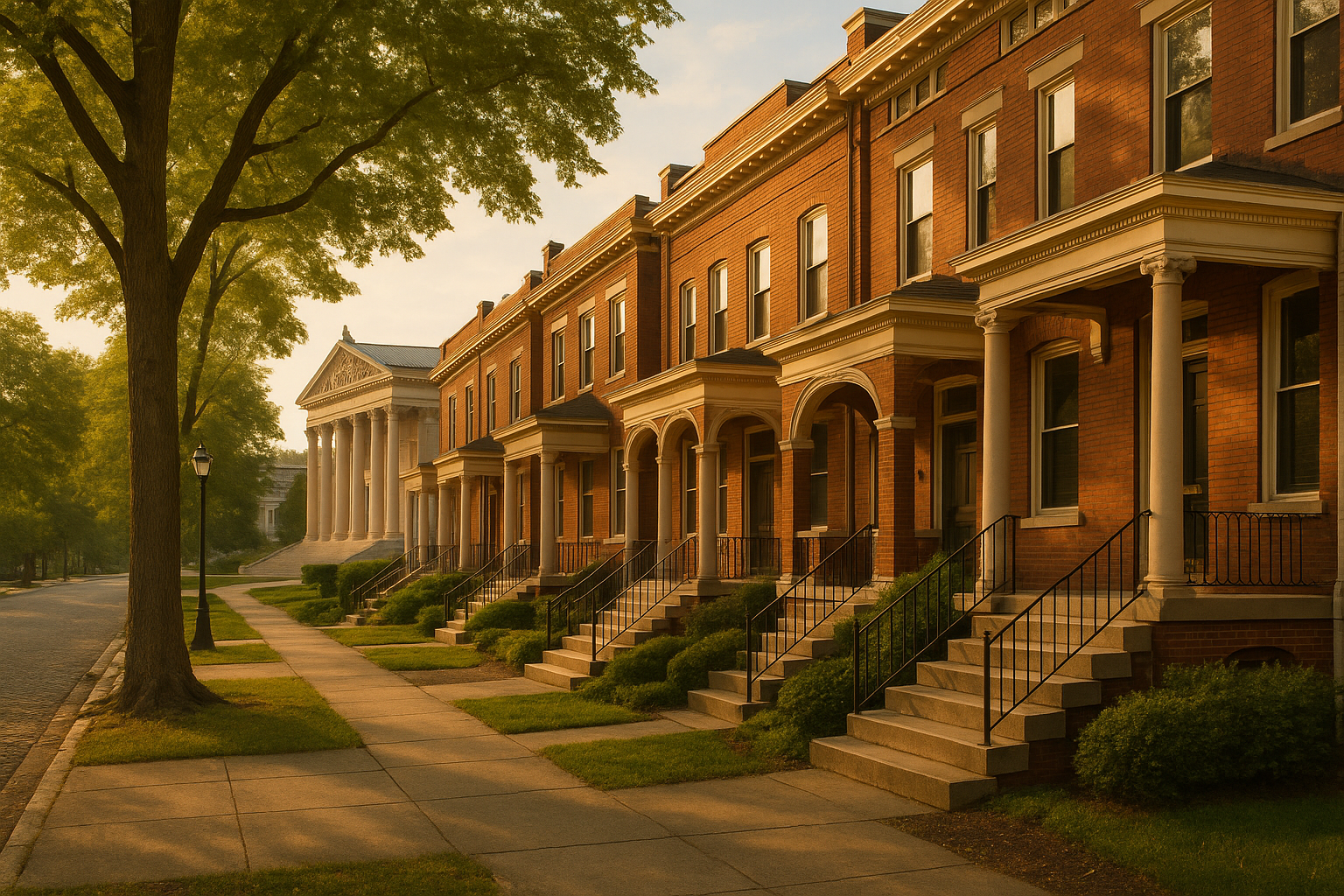
The Museum District — the graceful stretch of 23221 around the Virginia Museum of Fine Arts and the Boulevard, bordering Carytown — is defined by solid 1920s brick rowhomes and Tudor-influenced houses. They're better built than many older Richmond homes, but they share the same fundamentals: brick construction, below-grade basements or cellars, and party walls, all working in Central Virginia's humid climate.
The most common problem here is the below-grade level. These homes often have partially finished basements used as dens, offices, or apartments, and those spaces run humid through the long Richmond summer. Warm, moist air meets cool basement masonry and condenses; finished walls grow mold on their hidden back side; stored belongings mildew. Because the finishes hide the growth, homeowners in the Museum District often don't discover it until they smell it or move a bookshelf.
Bathrooms in these rowhomes — frequently stacked against party walls with limited ventilation — are a second recurring source, as are the kitchens tucked into the rear of the ground floor. The shared-wall layout means moisture in one unit can affect the next.
What local pros watch for in the Museum District
A local remediator checks the basement humidity and finished-wall cavities, inspects bathroom and kitchen ventilation, and reads whether a party wall is transmitting moisture. The durable fix controls basement humidity with dehumidification and, where needed, drainage — then remediates the finished materials so the lower level can be lived in without the musty smell.
The seasonal pattern here
Central Virginia's calendar drives the mold. From late spring through early fall, Richmond sits under warm, humid, subtropical air — relative humidity routinely climbs into the 80s and 90s, and the region's dense clay soil holds the moisture and releases it slowly. That's the long stretch when vented crawl spaces breathe wet air onto cool wood, AC systems and ducts sweat, and attics and bathrooms struggle to dry out. Layered on top is hurricane and tropical-storm season, which every few years sends heavy rain and flash flooding through the metro's creeks and low-lying districts. Winters are mild and comparatively dry, but they don't undo a summer's worth of moisture — so a problem that starts in July is often still growing quietly in January. Knowing that rhythm is half of staying ahead of it.
The daily cycle matters as much as the season. On a typical Richmond summer day the dew point stays high overnight, so surfaces that cooled after dark — a crawl-space joist, a basement wall, the underside of the roof deck — sit below the dew point and collect moisture in the early morning, then never fully dry before the next humid night. Repeat that for weeks and materials stay damp enough to grow mold without a single drop of rain or a visible leak. The shoulder months of April and October are the quiet windows when a home can actually dry out, which makes them the ideal time to inspect a crawl space, clear gutters, check grading, and get ahead of any moisture problem before the humid stretch returns. If you only look at your crawl space or lower level once a year, make it spring — catching a damp space before June is far easier than fighting it in August.
What to expect from a quote
A local pro will assess the home — reading the crawl space or basement, mapping moisture, and identifying the source, not just the visible mold — and give you a written, no-obligation estimate. Compare it against our Richmond cost guide and the estimator so you know the number is fair before you commit to anything.
Nearby areas we cover
We also connect homeowners with licensed local mold pros in the Fan, Scott's Addition, Forest Hill, and across the rest of the Richmond metro — the city itself plus Henrico, Chesterfield, and Hanover counties. Because moisture problems don't stop at a neighborhood line and the same clay soil and humid summers affect the whole region, the pro we match you with will know the housing and ground conditions on your particular block. Not sure which area you're in, or don't see your neighborhood listed? Just call — we cover the whole metro and we'll sort out who's the right fit for your home.