
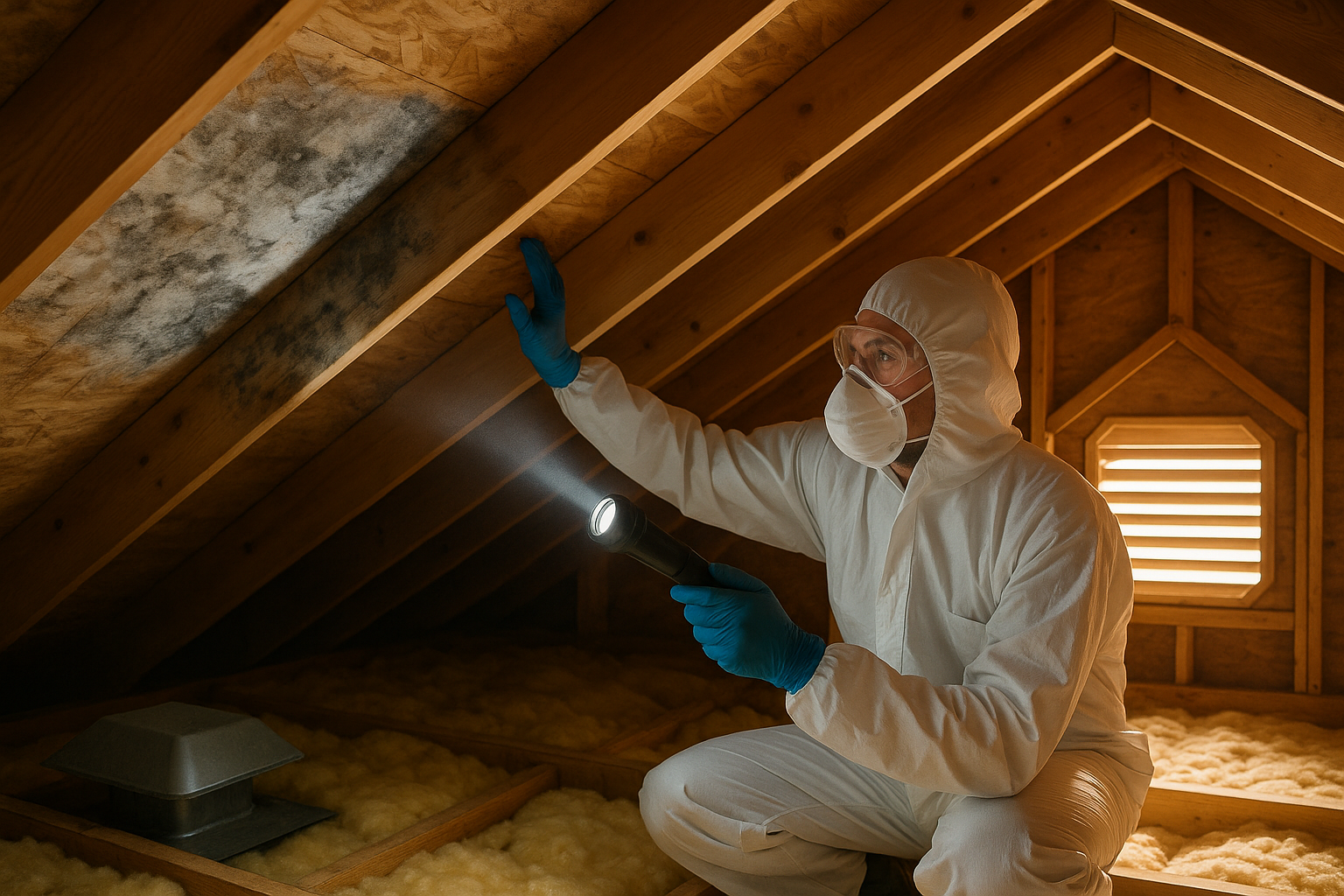
Why Richmond attics grow mold in summer
Attic mold in Central Virginia doesn't come from the cold — it comes from heat and humidity. On a July afternoon a Richmond attic can hit 130 degrees, and the air up there is thick with moisture drawn from the house and the outdoors. When the roof deck cools at night, or when a cooler surface meets that humid air, moisture condenses on the underside of the sheathing. Do that night after night for a whole muggy summer and you get the classic grey-black staining across the plywood near the eaves.
Three culprits show up again and again in Richmond homes:
- Bath and kitchen fans venting into the attic. An enormous number of local homes have exhaust fans that dump warm, wet bathroom air straight into the attic instead of out through the roof or soffit. Every hot shower feeds the mold.
- Blocked or missing ventilation. Insulation stuffed into the eaves, painted-over soffit vents, or a ridge vent that was never cut properly all trap humid air against the roof deck.
- AC and duct sweating. Air handlers and ductwork in the attic sweat in the humidity, wetting nearby insulation and framing.
How attic remediation works
Cleaning the mold is the easy part; stopping it from coming back is the job. A licensed remediator will:
- Contain and protect the living space below so spores don't fall through the attic hatch and ceiling penetrations.
- Remediate the sheathing — HEPA-vacuuming and treating or, where staining is heavy, carefully cleaning the roof deck back to sound wood. Structural sheathing rarely needs full replacement unless it's rotted.
- Remove ruined insulation that's been wet or contaminated.
- Fix the ventilation. This is the permanent fix: re-routing bath fans to vent outside, clearing soffit and ridge vents, adding baffles so air can actually move, and correcting any duct sweating.
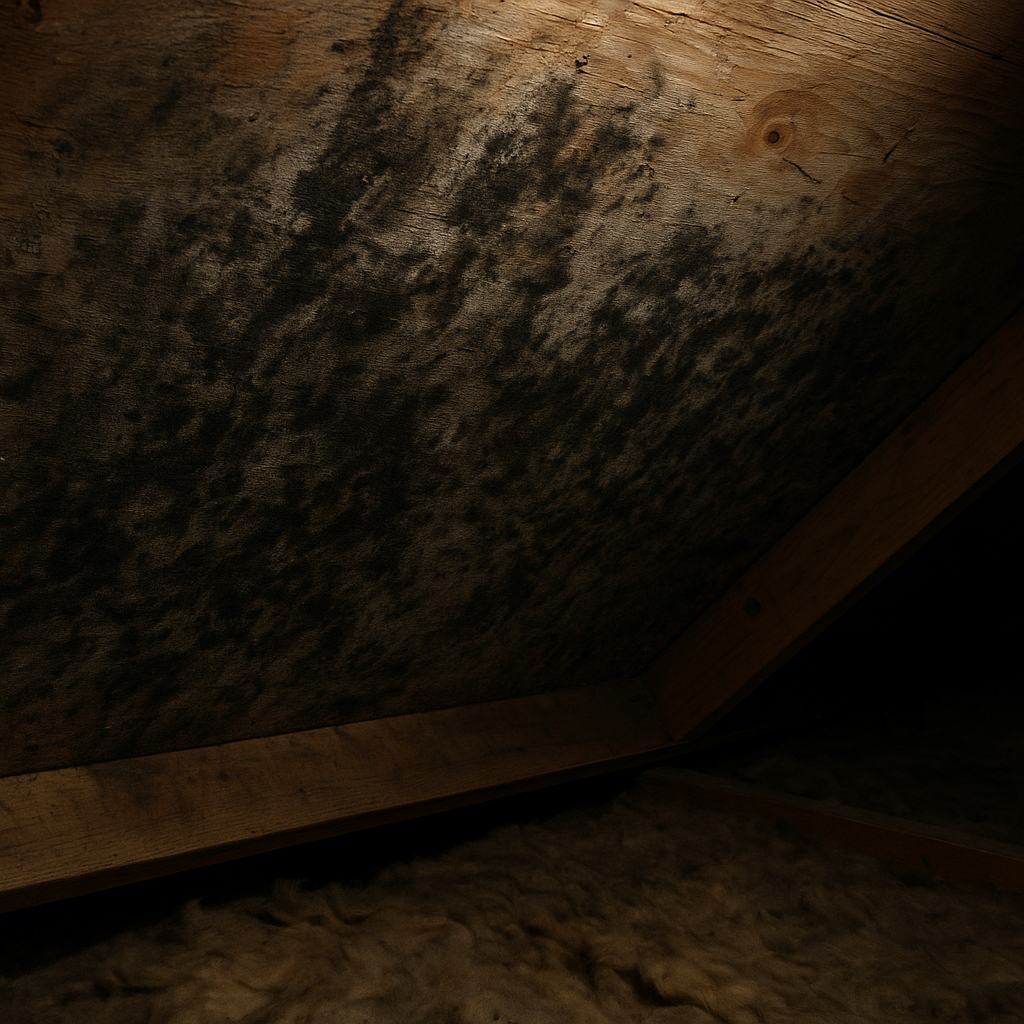
The problem found
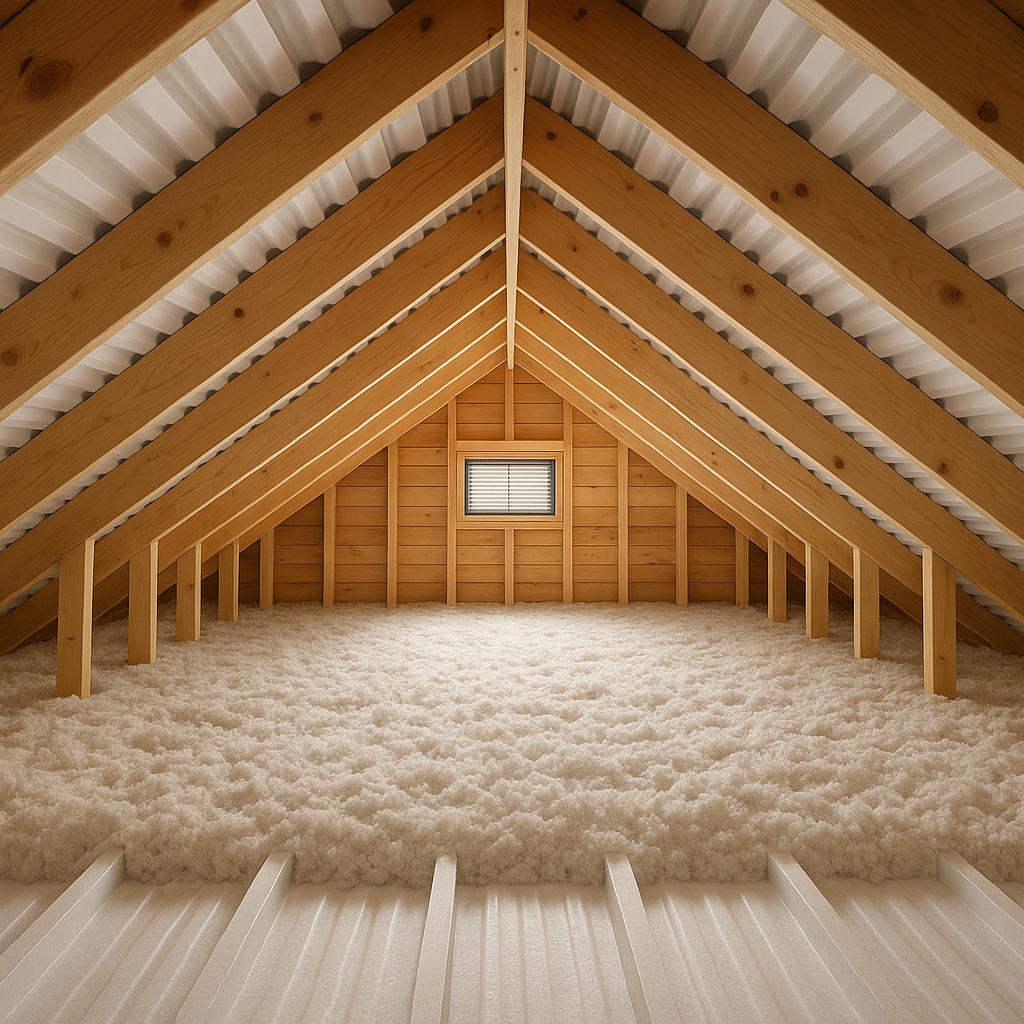
After remediation
Roof leak or condensation?
Homeowners often assume attic mold means the roof is leaking. Sometimes it is — and if so, that has to be fixed first. But in Richmond the more common cause by far is condensation from humidity and poor ventilation, which shows up as broad, even staining across the sheathing rather than a localized stain under one spot. A good inspection tells the two apart, because the fix is completely different: a roofer for a leak, a ventilation correction for condensation.
Catch it before it spreads down
Attic moisture doesn't always stay in the attic. Wet insulation loses its R-value and can drop moisture onto the ceiling below, and a humid attic feeds the whole home's moisture load. If you've noticed staining on an upstairs ceiling, a musty smell near the attic hatch, or higher-than-normal cooling bills, it's worth having the attic looked at along with the rest of the home's moisture picture.