What people mean by "black mold"
When most homeowners say black mold, they're picturing Stachybotrys chartarum, a dark, slimy mold that grows on chronically wet paper-faced drywall, wood, and cardboard. It gets the headlines. But plenty of harmless-to-moderate molds are also dark in color, and you genuinely cannot identify a species by eye — a green-black patch in a Richmond bathroom might be ordinary Cladosporium, not Stachybotrys. That's why professionals test rather than guess, and why you shouldn't panic based on color alone.
What matters more than the name is the condition that grew it. Stachybotrys needs sustained moisture — days to weeks of a material staying wet. In Richmond that points to a real, ongoing water problem: a long-running leak, a flood that wasn't dried fast enough, or a crawl space that never dries out through the humid season. Finding black mold is a signal to find that water.
Why it needs careful handling
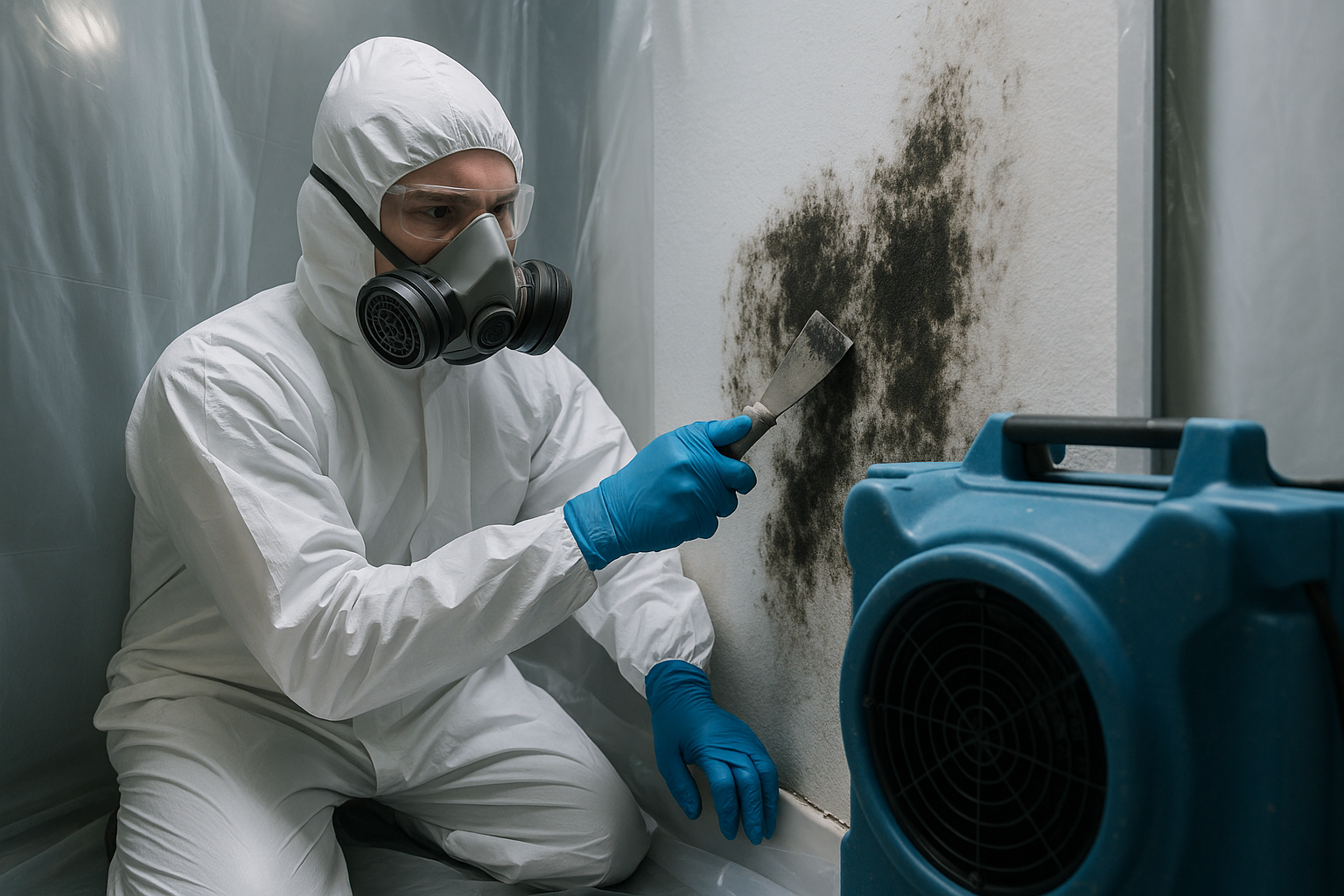
The reason to treat suspected toxic-appearing mold with respect isn't drama — it's that disturbing it releases spores and, in the case of Stachybotrys, potential mycotoxins into the air. Dry-scrubbing a colony or ripping out drywall without containment can spread the problem through the whole house on the HVAC system and the natural stack effect that pulls crawl-space and basement air upward. That's the opposite of what you want.
A qualified remediator handles it like this:
- Containment first. The work area is sealed with plastic and put under negative air pressure so nothing escapes into clean rooms.
- PPE and HEPA. Technicians wear respirators and suits; HEPA air scrubbers run continuously to capture airborne spores.
- Wet removal, not dry. Affected porous materials are misted, removed, and bagged out through the containment so spores stay down.
- Cleaning and treatment. Salvageable surfaces are HEPA-vacuumed, cleaned, and treated with an antimicrobial.
- Clearance testing. An independent post-remediation test confirms indoor spore levels are back to normal.
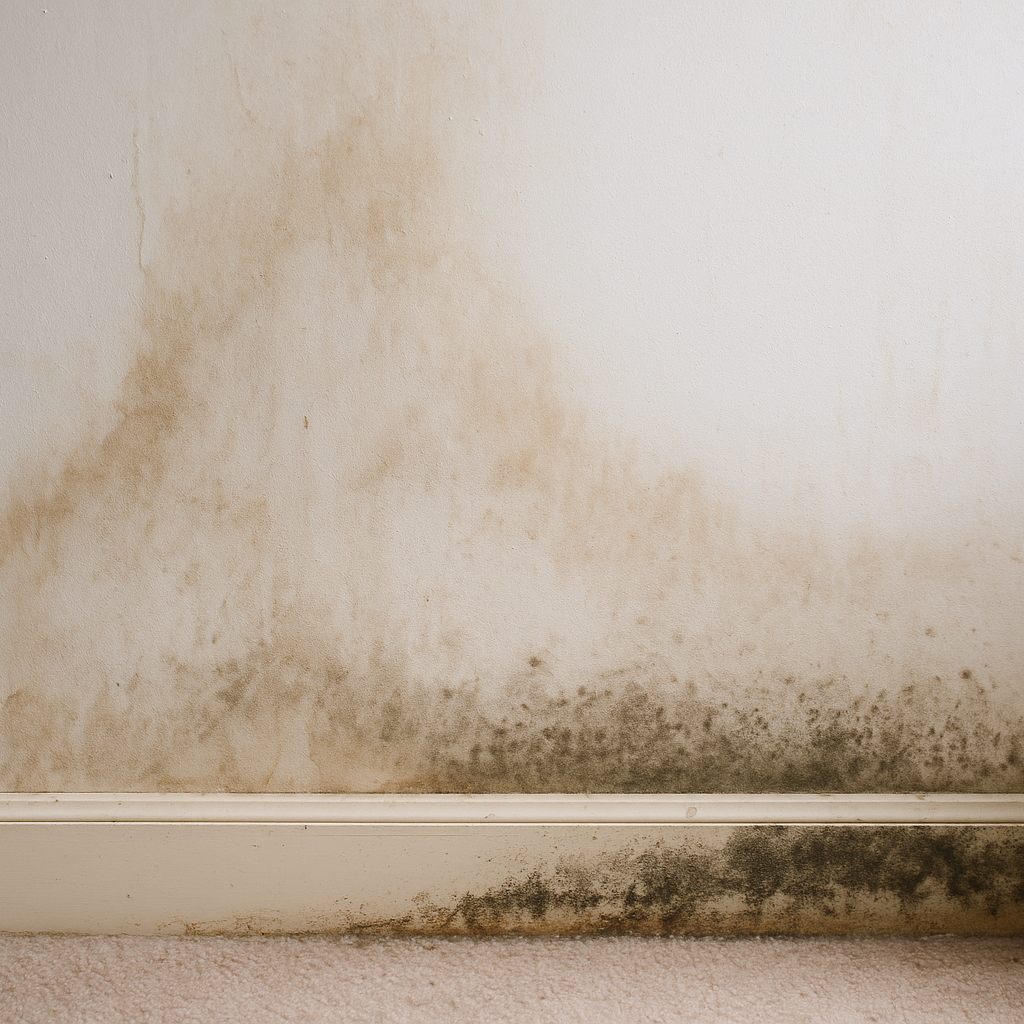
Dark growth on chronically damp drywall
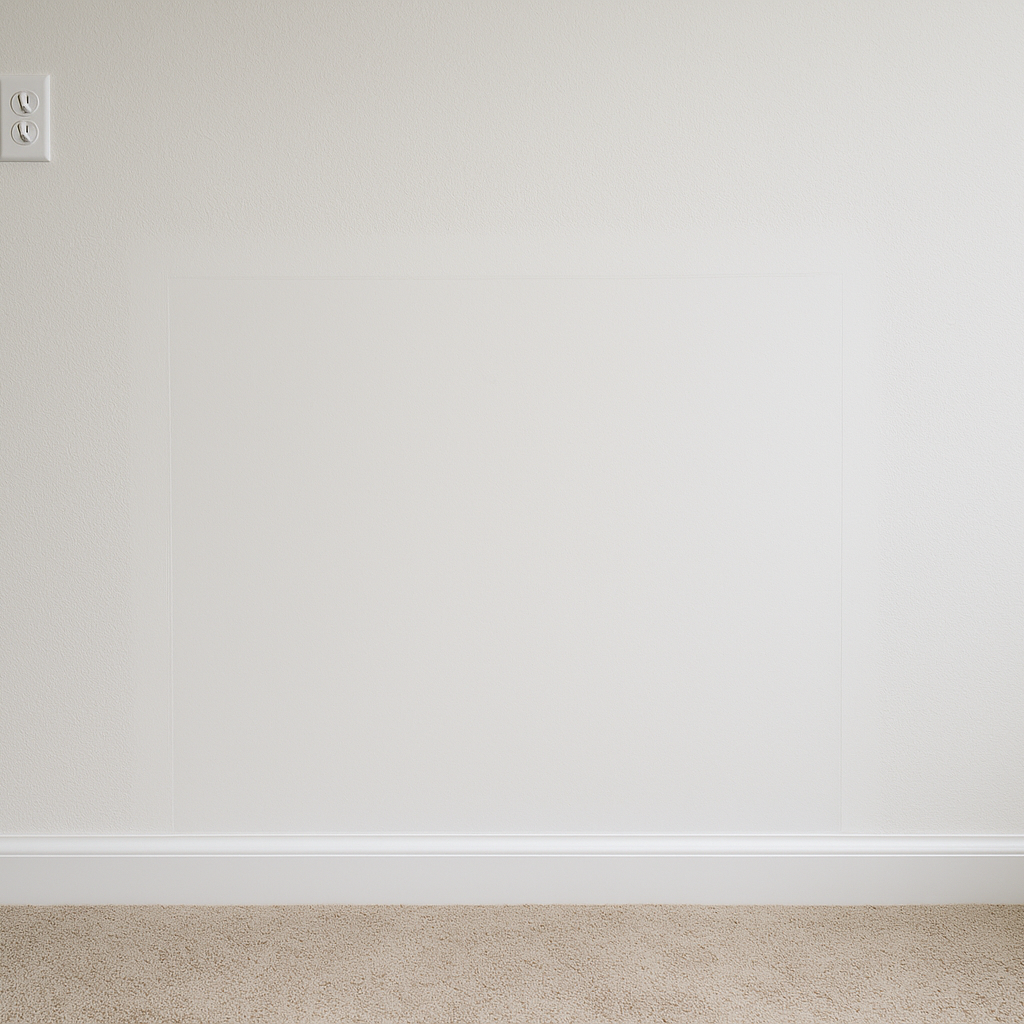
Removed, replaced, and sealed after the leak was fixed
Health, honestly
The science on mold and health is less cinematic than the internet suggests, but it's real: mold exposure can trigger allergy and asthma symptoms, irritate airways, and cause more trouble for infants, older adults, and people with compromised immune systems or respiratory conditions. Sweeping claims about mold causing every symptom under the sun aren't well supported. If someone in your home has unexplained respiratory symptoms that improve when they leave the house, that's worth mentioning to both a doctor and your inspector. For a balanced overview, see our guide on mold and your health.
Don't disturb it while you decide
If you think you've found black mold, the most useful thing you can do is leave it alone. Don't scrub it, don't run a fan on it, and don't start demolition. Close off the room if you can, keep the HVAC from circulating that air, and get it looked at. Removing it correctly is straightforward for a pro; spreading it around the house first only makes the eventual job bigger.