Mold in Manchester & Southside
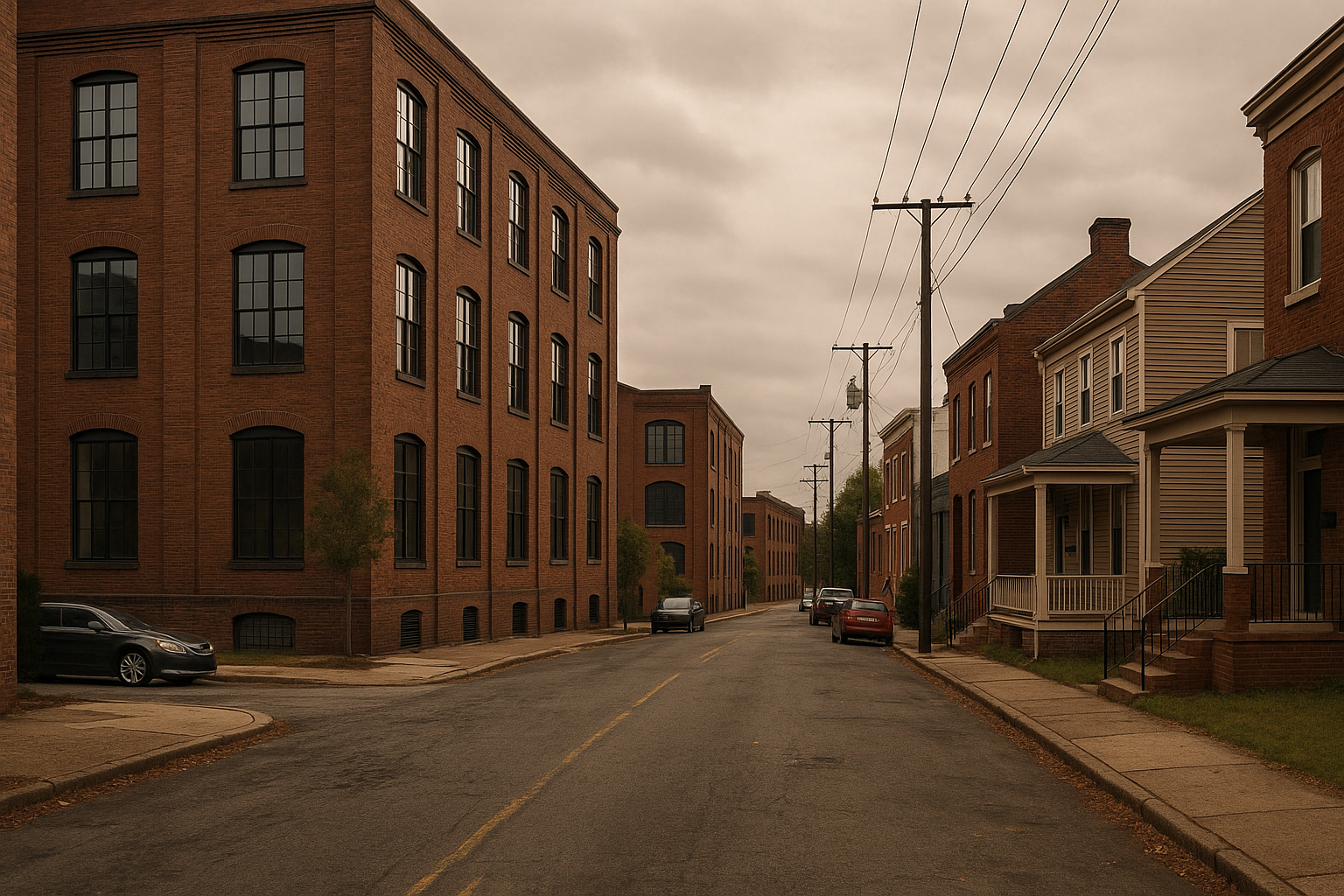
Manchester — the rapidly redeveloping district across the James in 23224 — was Richmond's industrial south bank, and it still reads that way: old brick warehouses and factories converted into apartments and offices, mixed with modest older homes and new construction. Its position low by the river shapes its moisture problems.
The 1995 floodwall protects Manchester from the James itself, but the district's low elevation still means high groundwater and a history of storm-water and flash flooding — Tropical Storm Gaston in 2004 famously overwhelmed the low areas around the river with creek and street flooding, not just river rise. Converted industrial buildings bring their own issues: massive masonry that holds moisture, ground-floor and below-grade units close to the water table, flat roofs that pond, and huge HVAC systems that sweat.
The older homes and new infill in South Richmond, Oak Grove, and Belle Meade nearby mostly sit over crawl spaces on the same low, moisture-holding ground. Between the humidity, the water table, and the industrial building stock, Manchester keeps remediators busy on both residential and commercial jobs.
What local pros watch for in Manchester
A remediator working Manchester reads the elevation and water table, checks below-grade and ground-floor units for intrusion and humidity, and — in converted buildings — looks at flat roofs and commercial HVAC as moisture sources. Fixes range from crawl-space encapsulation on the homes to structural drying and dehumidification in the lofts, always paired with correcting the water source.
The seasonal pattern here
Central Virginia's calendar drives the mold. From late spring through early fall, Richmond sits under warm, humid, subtropical air — relative humidity routinely climbs into the 80s and 90s, and the region's dense clay soil holds the moisture and releases it slowly. That's the long stretch when vented crawl spaces breathe wet air onto cool wood, AC systems and ducts sweat, and attics and bathrooms struggle to dry out. Layered on top is hurricane and tropical-storm season, which every few years sends heavy rain and flash flooding through the metro's creeks and low-lying districts. Winters are mild and comparatively dry, but they don't undo a summer's worth of moisture — so a problem that starts in July is often still growing quietly in January. Knowing that rhythm is half of staying ahead of it.
The daily cycle matters as much as the season. On a typical Richmond summer day the dew point stays high overnight, so surfaces that cooled after dark — a crawl-space joist, a basement wall, the underside of the roof deck — sit below the dew point and collect moisture in the early morning, then never fully dry before the next humid night. Repeat that for weeks and materials stay damp enough to grow mold without a single drop of rain or a visible leak. The shoulder months of April and October are the quiet windows when a home can actually dry out, which makes them the ideal time to inspect a crawl space, clear gutters, check grading, and get ahead of any moisture problem before the humid stretch returns. If you only look at your crawl space or lower level once a year, make it spring — catching a damp space before June is far easier than fighting it in August.
How the matching works
Tell us what's going on — a musty crawl space, a stain, a damp room — by form or phone. We connect you with a licensed, independent mold professional who serves this part of the metro and handles your kind of problem, then step back so you get a free, no-pressure quote. We're a referral service, not a contractor, so the assessment is the pro's, not a sales pitch from us.
Nearby areas we cover
We also connect homeowners with licensed local mold pros in Forest Hill, Midlothian, Chester, and across the rest of the Richmond metro — the city itself plus Henrico, Chesterfield, and Hanover counties. Because moisture problems don't stop at a neighborhood line and the same clay soil and humid summers affect the whole region, the pro we match you with will know the housing and ground conditions on your particular block. Not sure which area you're in, or don't see your neighborhood listed? Just call — we cover the whole metro and we'll sort out who's the right fit for your home.