
Mold is local, and Richmond's version is specific
Every region grows mold its own way. Phoenix has swamp coolers; Minneapolis has snowmelt basements. Richmond's mold comes from a very particular combination of climate, soil, and housing, and understanding it is the key to actually fixing the problem instead of chasing spots around the house.
1. A long, humid, subtropical summer
Richmond sits in a humid subtropical climate. From late spring into early fall, warm, moisture-laden air settles over the region and relative humidity routinely climbs into the 80s and 90s. Mold doesn't need standing water to grow — it needs materials to stay damp, and months of high humidity keep wood, drywall, and fabric damp enough to colonize. That long moist season is the engine behind most local mold.
2. Dense clay soil
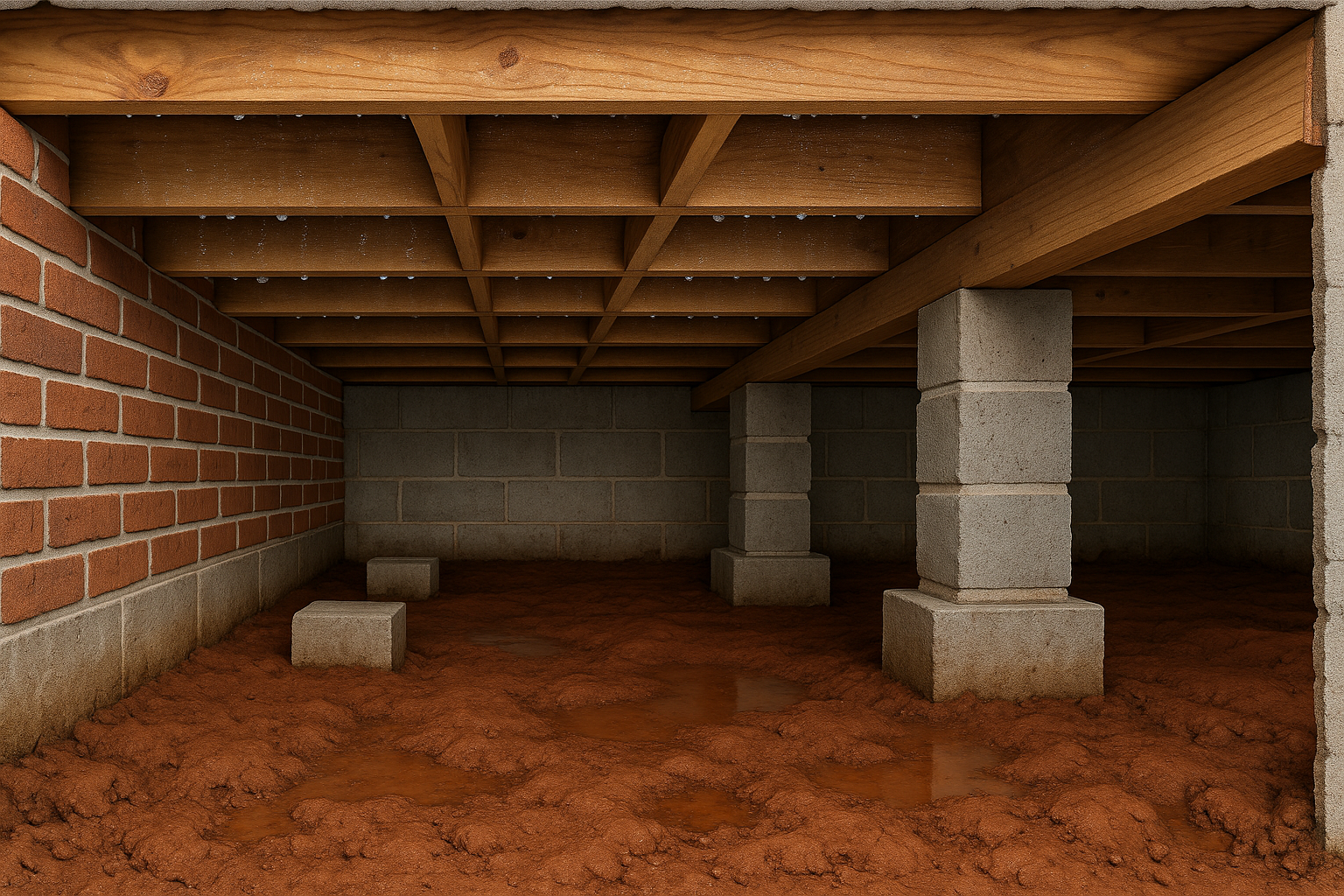
The ground under Central Virginia is heavy red clay. Clay holds water rather than draining it, so after every rain it stays wet for days and slowly releases moisture as vapor. It also shrinks and swells with the seasons, pressing on foundations and opening paths for water. That clay sits right under your crawl space or basement, feeding it moisture year-round.
3. Vented crawl spaces
Here's the big one. The great majority of Richmond-area homes — historic and brand-new alike — sit over a vented crawl space. For generations the standard was to put open vents in the foundation to let outside air "dry" the space. In this climate that's exactly backwards: the humid summer air flows in, hits the cool surfaces under the house, and condenses. Combined with vapor rising from the clay floor, it keeps the crawl space damp all season. And because of the stack effect — warm air rising through the house pulls replacement air up from below — that musty crawl-space air ends up in the rooms you live in. A remarkable share of "upstairs" mold and air-quality complaints in Richmond actually start under the floor.
4. Old housing stock
Richmond's historic neighborhoods — the Fan, Church Hill, the Museum District, the Northside — are full of homes built before modern waterproofing and vapor barriers, on shallow foundations, English basements, and porous old brick that wicks moisture. Even the suburbs' newer homes often have builder-grade crawl spaces with thin vapor barriers that don't hold up to the climate.
5. The James and hurricane season
Finally, water events. The James River has flooded Richmond repeatedly — Hurricane Agnes in 1972, the 1985 flood, Tropical Storm Gaston in 2004 — and Central Virginia catches tropical systems and flash flooding every few years. When water gets into a home and isn't dried fast, mold follows within a day or two. Even with the downtown floodwall, storm water, creek flooding, and hurricane rain remain a real seasonal risk.
How the factors stack up
What makes Richmond challenging isn't any single one of these factors — it's that they reinforce each other. The clay soil feeds the crawl space; the crawl space feeds the whole house through the stack effect; the summer humidity keeps everything from drying out; and the old or builder-grade construction gives moisture easy places to hide. A home in a drier climate might shrug off one leaky vent or a shaded foundation, but here those small vulnerabilities compound over a long humid season into a real problem. That's also why spot-fixes disappoint: clean the bathroom mold but leave the crawl space wet, and the house stays humid and the mold finds a new home. The durable answer addresses the system, starting with the biggest moisture source, which in most Richmond homes is under the floor.
The neighborhoods it hits hardest
Every part of the metro deals with this, but the details shift by area. The historic city neighborhoods — the Fan, Church Hill, the Museum District, the Northside — combine old foundations and shallow below-grade spaces with mature tree canopy that keeps everything shaded and slow to dry. The suburbs of Henrico, Chesterfield, and Hanover trade age for builder-grade crawl spaces and tight modern construction on the same clay. And the low-lying areas near the James and the region's creeks add flood exposure on top of the everyday humidity. Wherever you are, the mechanism rhymes even when the specifics differ.
What it means for you
Put together, these factors mean Richmond mold is almost always a moisture problem, usually rooted in the crawl space and the summer humidity. The good news: that makes it fixable. Control the crawl-space moisture, correct drainage and ventilation, and dry water events fast, and you remove the conditions mold needs. If you're seeing or smelling mold, start by finding the water — an inspection with moisture mapping is the fastest way to do that.