
Mold hides; the clues don't
Most mold in Richmond homes grows where you can't see it — under the floor, behind walls, above ceilings. By the time you spot an actual colony, it's usually been growing a while. These twelve signs are the ones local homeowners notice first. If several ring true, it's worth an inspection.
- A musty, earthy smell. The number-one sign. That damp-basement odor means active microbial growth somewhere, even if you can't see it. In Richmond it often rides up from the crawl space.
- The smell is worse in summer. If the mustiness spikes during the humid months and fades in winter, that's a classic Central Virginia moisture signature.
- Allergy symptoms that ease when you leave. Sneezing, congestion, itchy eyes, or asthma flare-ups that improve when you're away from the house point toward something in the indoor air.
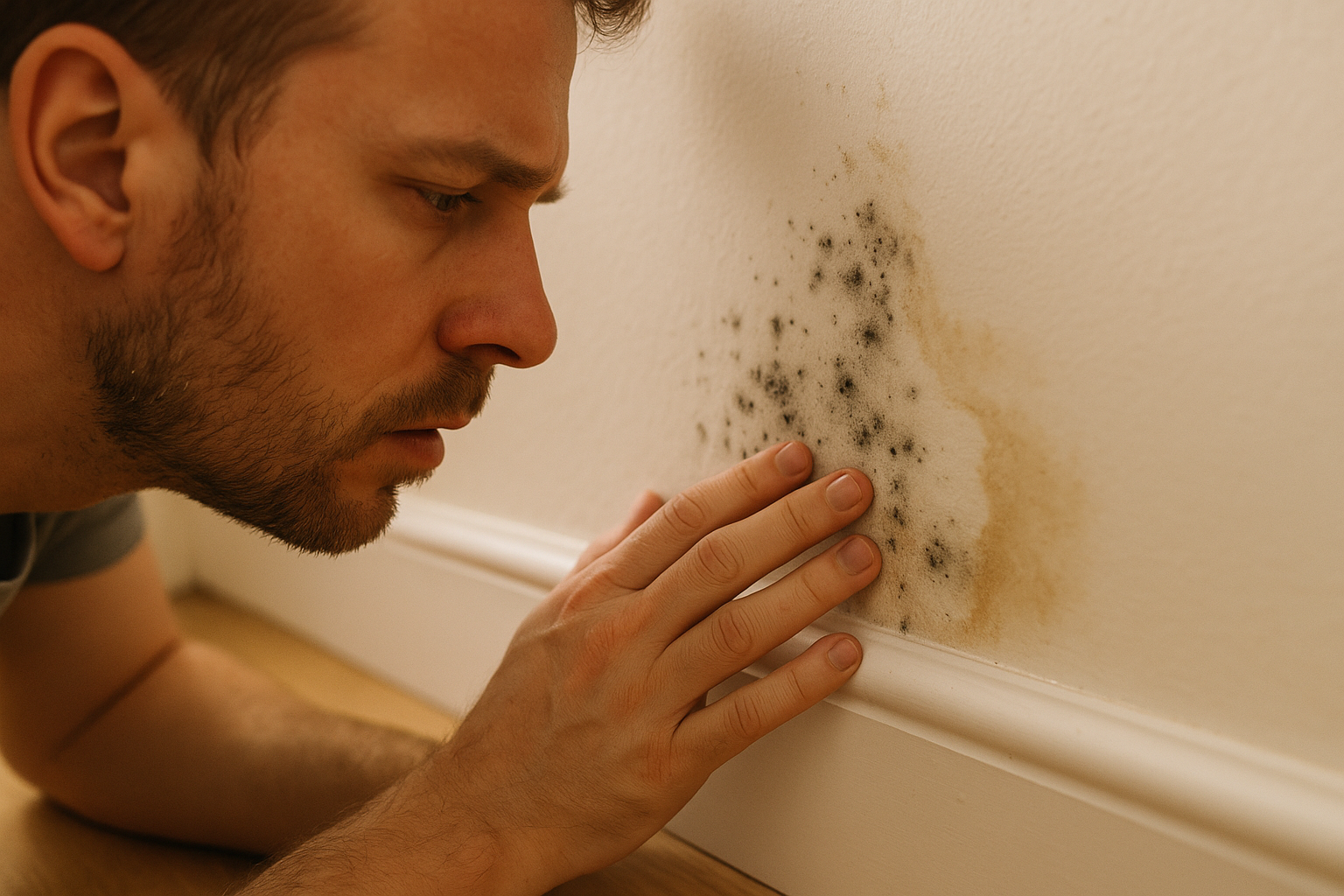
- Visible spots or staining. Black, green, or white patches on walls, ceilings, grout, or trim — especially in bathrooms and on north-facing exterior walls.
- Water stains or discoloration. Yellow-brown stains on ceilings or walls mark past or present leaks, and where water has been, mold often is.
- Peeling paint or bubbling wallpaper. Moisture behind a finish pushes it off the wall — a sign of dampness in the material.
- Warped or springy floors. Cupping hardwood or a soft spot underfoot, often over a wet crawl space or near a bathroom, signals moisture in the subfloor.
- Condensation. Sweating windows, pipes, or ductwork mean indoor humidity is high enough to feed mold.
- A damp or humid crawl space. If you open the crawl-space hatch to moist air, wet insulation, or a dirt floor that's damp to the touch, that's the source hiding in plain sight.
- Rusting or corrosion. Rust on nails, HVAC components, or metal in the crawl space or basement indicates chronic dampness.
- Deteriorating grout and caulk. Crumbling, darkening grout and caulk in the bathroom is both a sign and a cause of moisture intrusion.
- Higher energy bills. A humid house is harder to cool; a crawl space or attic full of moisture makes your AC work harder all summer.
What to do if you recognize these
One sign might be nothing; several together usually mean there's moisture and likely mold to find. The most useful next step isn't to start tearing into walls — it's to get the home's moisture read professionally. An inspection with moisture mapping finds the source and tells you how big the problem really is before you spend on remediation.
How urgent is it?
Not every sign means an emergency, and it helps to know the difference. A little surface mold on bathroom grout from a humid week is routine maintenance. A musty smell that's been there for months, visible growth spreading across a wall, soft or springy flooring, or symptoms in a household member point to something more established that's worth addressing sooner. The genuinely time-sensitive situations are active water — a flood, a burst pipe, a leak actively wetting materials — where mold can start within a day or two and every hour of drying counts. If you're unsure where your situation falls, that uncertainty is itself a good reason to have it looked at rather than to wait and wonder.
Where to look in a Richmond home
If several signs have you checking, focus on the places local mold favors. Open the crawl-space hatch and use a flashlight on the joists, the vapor barrier, and the insulation — the most common source in the metro. Check under and behind bathroom and kitchen fixtures for slow leaks. Look at the ceilings below bathrooms and along the top of the attic hatch. Feel exterior-wall closets and the north side of the house for damp, cool surfaces. And trust your nose: follow the musty smell to where it's strongest, which is usually closest to the moisture. What you find (or smell) tells the inspector where to concentrate.
Don't disturb what you find
If you do find visible mold, resist the urge to scrub or demolish it yourself — disturbing it releases spores that spread through the house. Close off the area, keep the HVAC from circulating that air, and get it assessed. Request a free quote or call (804) 292-2499.