
How Richmond basements and lower levels grow mold
Richmond isn't a basement town the way the upper Midwest is — most homes here sit over a crawl space. But the city's older neighborhoods are the exception. Brick rowhouses in the Fan and the Museum District, and the 18th- and 19th-century homes on Church Hill, frequently have English basements, cellars, and garden-level units built partly below grade. Those spaces were dug into Richmond's clay-heavy soil generations before modern waterproofing, and they behave like sponges.
The moisture arrives three ways. First, humidity: for months each summer, warm outdoor air pours into a cool below-grade room and condenses on masonry and concrete, the same way a cold glass sweats on a July porch. Second, groundwater: clay soil holds rainwater against old foundation walls and wicks it through porous brick and block. Third, plumbing and grading: a downspout dumping at the foundation, a graded-wrong side yard, or an aging supply line quietly feeds the wall for months. Any of the three, left alone, grows mold on drywall, wood trim, stored belongings, and the back side of finished walls.
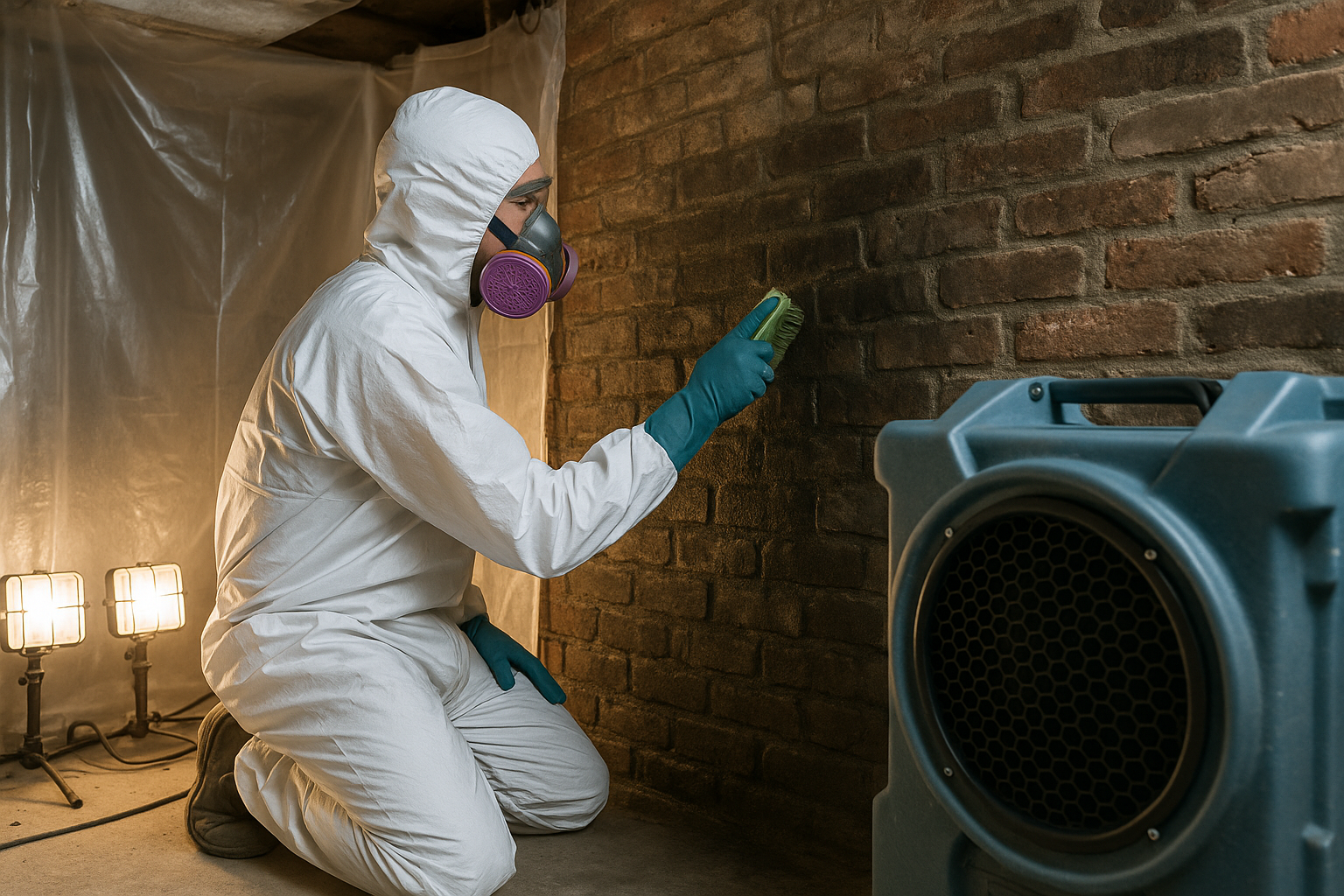
How the removal works
A licensed local remediator works the problem in a defined order rather than just wiping down what's visible:
- Containment. Plastic sheeting and negative air pressure seal the work zone so spores don't ride the home's stack effect up into the living space during removal.
- Removal of porous materials. Mold-damaged drywall, carpet, pad, and insulation are cut out and bagged. Non-porous surfaces like sealed masonry and concrete can often be cleaned and saved.
- HEPA filtration and cleaning. Air scrubbers run throughout, and surfaces get HEPA vacuuming and an antimicrobial treatment.
- Drying. Commercial dehumidifiers and air movers pull the space down to a normal moisture content, verified with a meter — not by feel.
- The moisture fix. This is the step that separates a lasting job from a callback: correcting grading and downspouts, adding a dehumidifier, sealing or waterproofing the wall, or installing a sump and drainage where water genuinely intrudes.
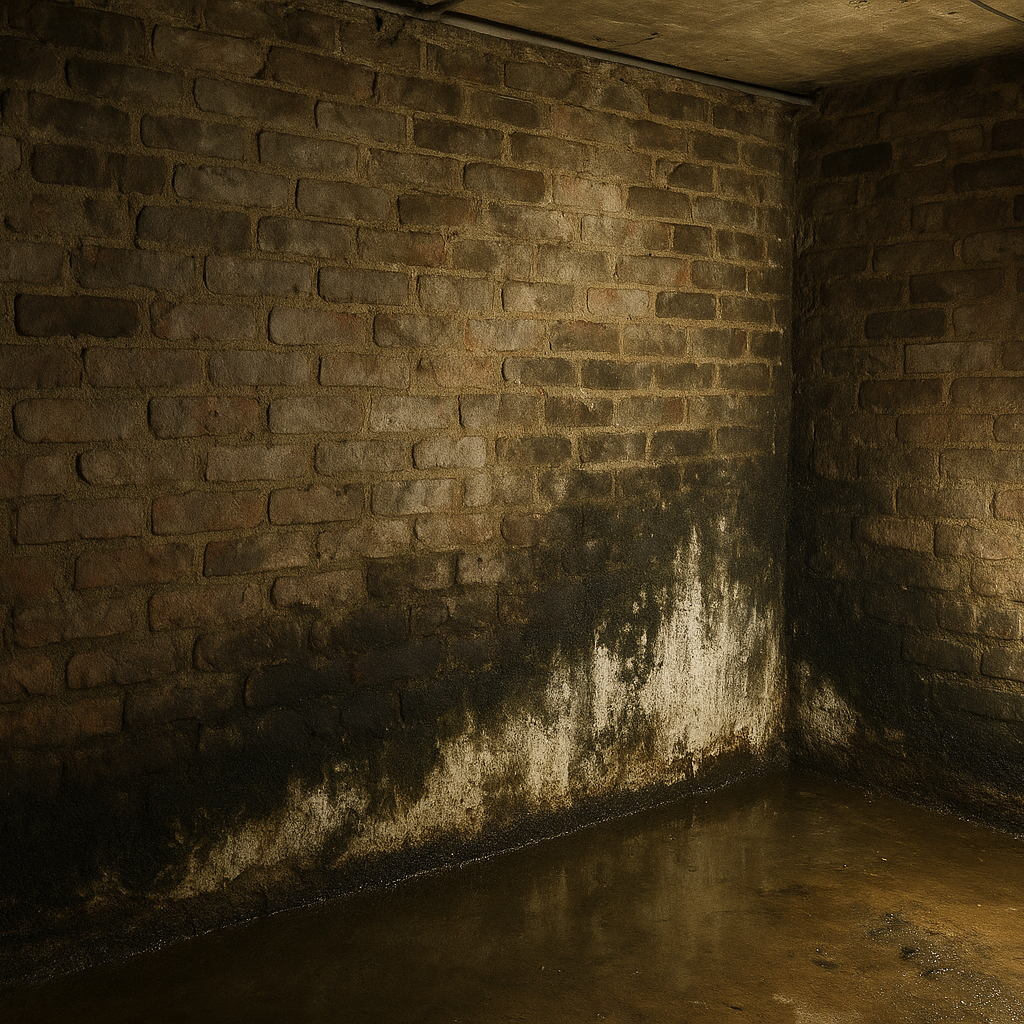
The problem found
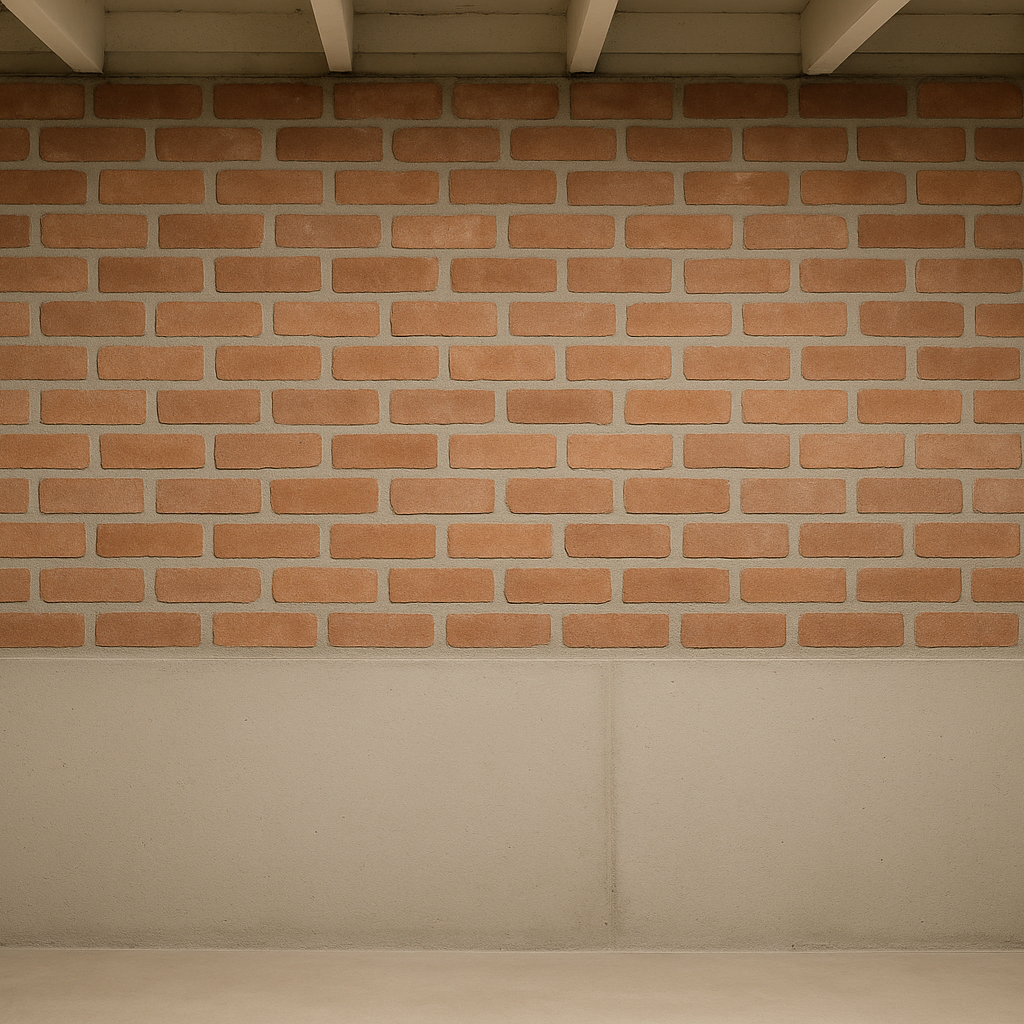
After remediation
Finished lower levels and rentals
A lot of Richmond's below-grade space is finished — a rec room, a home office, or an English-basement apartment rented out through the summer. Finished space is where mold hides longest, because the growth starts on the back of the drywall and the underside of the subfloor where nobody looks until the musty smell gets undeniable. If you have a finished lower level and you're smelling that telltale earthy odor, don't wait for a visible spot; that's exactly the situation where an inspection with moisture mapping pays for itself.
Basement or crawl space? Often both
Plenty of older Richmond homes have a partial basement and a crawl space under a later addition. Water and humidity migrate between them, so a wet crawl space can keep re-humidifying a basement you just dried out. A good remediator looks at the whole under-floor system, which usually means pairing basement work with crawl space encapsulation so both spaces stay dry for good.