In Richmond, summer is mold season
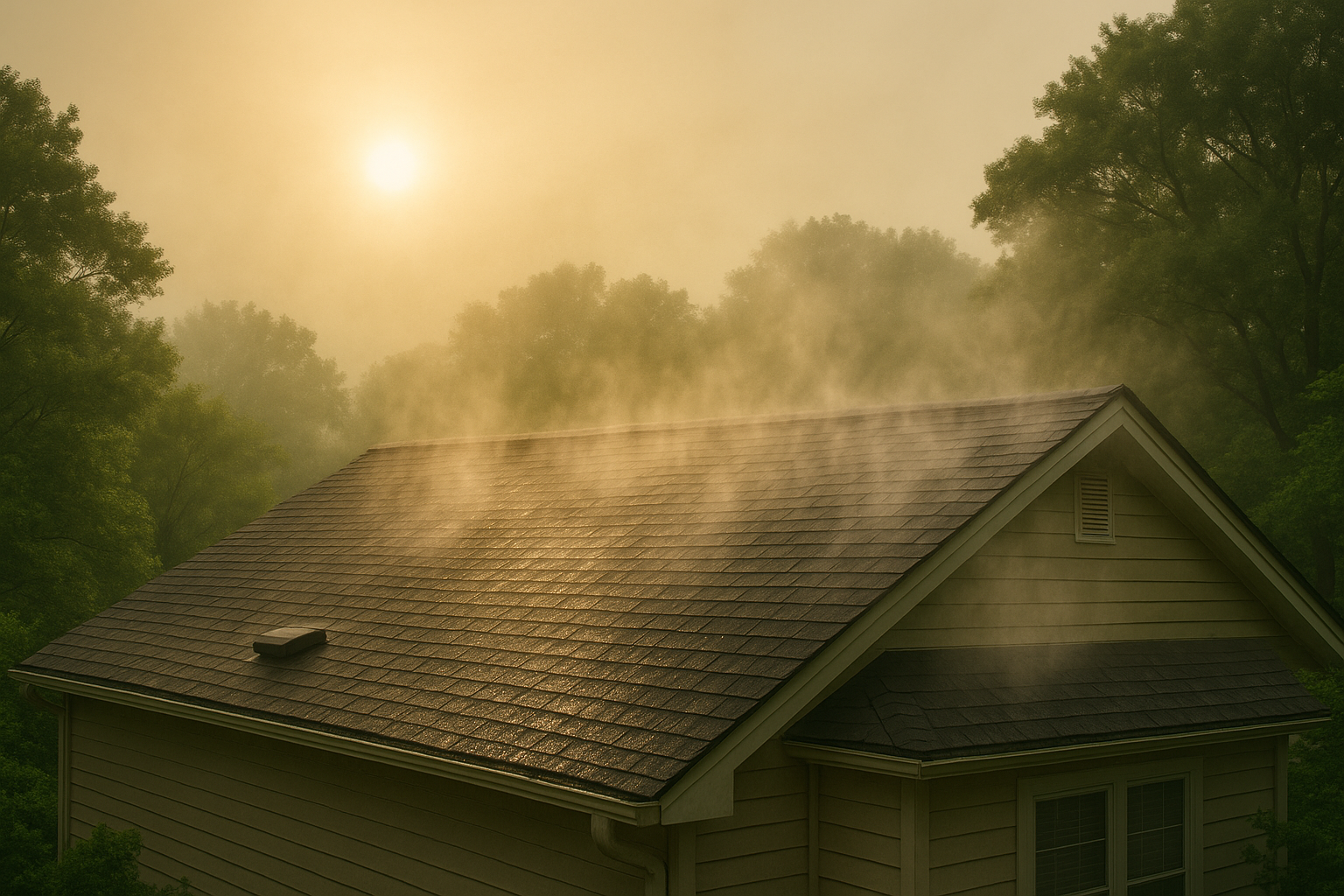
In northern cities, attic and moisture problems peak in winter, driven by ice dams and freezing. Central Virginia is the opposite: our mold season is the long, muggy summer. From May through September, relative humidity sits in the 80s and 90s for weeks at a time, and that constant atmospheric moisture is what feeds mold across the whole house — attic, crawl space, bathrooms, and closets alike.
Why the attic gets it
A Richmond attic in July is brutally hot and full of humid air — some drawn up from the house, some infiltrating from outside. When that moist air meets a cooler surface, like the roof deck at night or ductwork running cold, it condenses. Night after humid night, that condensation dampens the underside of the roof sheathing and grows the grey-black staining that homeowners mistake for a roof leak. Three things make it worse:
- Bath fans venting into the attic. Extremely common here, and a direct moisture pipeline every time someone showers.
- Blocked ventilation. Insulation stuffed into the eaves or painted-over soffit vents stop the airflow that would otherwise carry moisture out.
- Sweating AC and ducts. Cold air handlers and ductwork in a hot, humid attic condense moisture onto themselves and the insulation around them.
Why the crawl space gets it
The same humidity drives the bigger problem under the house. Warm, wet summer air flows into vented crawl spaces and condenses on cool joists and subfloor, while the clay soil below adds vapor of its own. The crawl space sits saturated for months, and the stack effect carries that damp air up into the living space. This is the single most common source of summer mold in Richmond homes. Our crawl space encapsulation page covers the fix in depth.
Why your AC matters
Air conditioning does more than cool — it dehumidifies, pulling moisture out of the air as it runs. That's genuinely helpful in a Richmond summer. But an oversized or short-cycling AC cools the air without running long enough to dry it, leaving the house cool but clammy and mold-prone. And when the AC's condensate drain clogs — a frequent problem — it can dump water into the attic, closet, or crawl space where the air handler sits, creating a new mold source.
Closets, corners, and the north side of the house
Summer humidity doesn't only hit the obvious spots. In Richmond homes it also shows up in closets on exterior walls, behind furniture pushed tight against north-facing walls, and in spare rooms that are closed off and unconditioned through the summer. These are the still-air pockets where humid indoor air settles against the coolest surfaces and never moves. Homeowners are often baffled to find mold on the back of a leather bag, a stretch of closet wall, or a stored mattress — but it's the same mechanism as the attic and crawl space, just in miniature. Leaving a little air gap behind furniture, keeping closet doors cracked, and running the AC or a dehumidifier in closed-off rooms all help those micro-climates stay dry.
What a humid summer costs you
Beyond the mold itself, a chronically humid house is an expensive one. Your air conditioner works harder and runs longer trying to cool air that's heavy with moisture, driving up summer power bills. Wood floors, doors, and trim swell and stick. Musty odors settle into fabrics and stored belongings. And the moisture slowly degrades the very structure — crawl-space joists, subfloor, roof sheathing — that holds the house together. Controlling humidity isn't just a mold measure; it's a comfort, cost, and preservation measure that pays for itself over Richmond's long cooling season.
Breaking the cycle
The through-line is humidity control. Vent bath fans outside; clear and balance attic ventilation; keep AC condensate lines clear and the system properly sized; and above all, seal and dehumidify the crawl space so it stops feeding the whole house moisture. Do those, and you take away the dampness that Richmond's summer mold depends on. If you're already seeing attic staining or smelling a musty crawl space, get it assessed before the season does more damage — call (804) 292-2499.