The molds you're likely to meet
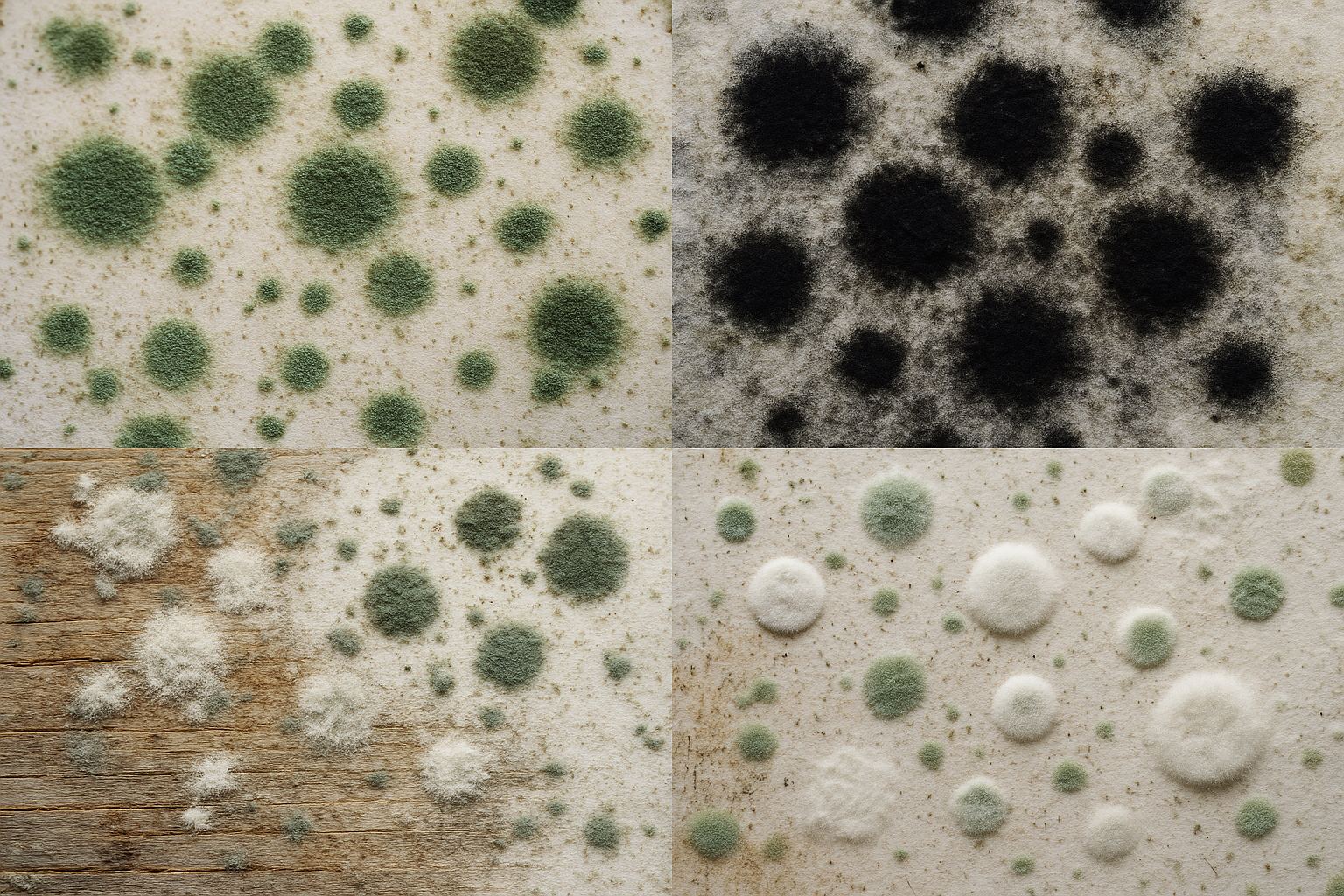
Thousands of mold species exist, but a handful account for most of what turns up in Richmond homes. You genuinely can't identify a species by eye — that takes lab analysis — but knowing the common players helps you make sense of an inspection report and understand what each finding tends to mean.
Cladosporium
One of the most common indoor and outdoor molds, Cladosporium appears as green, brown, or black spots on damp surfaces — painted walls, window frames, fabrics, and bathroom grout. It's a frequent find in humid Richmond bathrooms and on cool exterior walls. It's a common allergen but not considered highly toxic; still, its presence indoors points to a moisture problem.
Aspergillus
Extremely common, Aspergillus comes in many colors and grows on walls, insulation, HVAC systems, and stored items. It thrives in the kind of chronic humidity Richmond crawl spaces and attics provide. Most people tolerate it, but it's a significant allergen and can be a genuine concern for people with weakened immune systems.
Penicillium
Blue-green and velvety, Penicillium spreads fast on water-damaged materials — carpet, wallpaper, insulation, and drywall after a leak or flood. It's a common cause of that musty smell and a frequent post-water-damage find. It's a known allergen.
Stachybotrys chartarum ("black mold")
The famous one. Dark green to black and often slimy, Stachybotrys needs sustained moisture — days to weeks of wet, so it signals a real ongoing water problem. It grows on constantly damp, cellulose-rich materials like paper-faced drywall and cardboard. It's the species behind most "toxic mold" concern and warrants careful, contained removal. See our black mold removal page.
Alternaria
A common allergenic mold that shows up in damp bathrooms, under sinks, and around windows — velvety with dark green or brown hairs. It's one of the more common triggers for mold allergies and often appears wherever there's condensation or a slow leak.
Chaetomium
Found in chronically water-damaged buildings, Chaetomium has a cotton-like texture that darkens with age and a distinct musty odor. Like Stachybotrys, finding it usually means there's been serious, sustained moisture — often behind walls or under floors after a leak or flood.
Why identification matters (and why it doesn't)
Here's the balanced view: the exact species matters less than the fact that mold is growing at all, because any significant indoor mold means you have a moisture problem that needs fixing. Where identification does help is in gauging urgency and health risk — finding water-damage indicators like Stachybotrys or Chaetomium tells you there's been sustained moisture and points to a hidden source. That's what an inspection with lab testing is for.
Where each tends to turn up in a Richmond home
Location often hints at what you're dealing with, even before testing. In the bathroom, on grout and caulk, you're most likely looking at Cladosporium or Alternaria feeding on constant humidity. On drywall and insulation after a leak or flood, fast-spreading Penicillium is common. In the crawl space and on HVAC components, Aspergillus thrives in the chronic dampness. And the water-damage indicators — Stachybotrys and Chaetomium — show up on materials that have stayed soaked for a long time, which is why finding them points to a sustained, often hidden moisture source like a long-running leak or a crawl space that never dries. None of this replaces a lab test, but it helps you understand why a professional will want to look at the moisture behind the growth, not just the growth itself.
Mildew versus mold
People often ask about "mildew" as if it's something different. In everyday use, mildew usually just means a flat, surface-level mold growth — the powdery gray or white film on a shower wall or a shaded patch of siding. It's still mold; it's simply early or surface-limited. The reason the distinction matters is that surface mildew on a hard, non-porous surface is often something a homeowner can clean, while mold that has rooted into porous grout, drywall, wood, or insulation, or that keeps returning, indicates a moisture problem that needs a real fix. When in doubt, the deciding questions are the same: is it on a porous material, is it spreading, and does it keep coming back?
The common thread
Notice what every one of these molds needs: moisture. In Richmond that moisture almost always traces back to the same handful of sources — the crawl space, summer humidity, a leak, or a flood. Identify and fix the water, and you remove what all of them depend on. If you've got mold of any kind, that's the real target. Call (804) 292-2499 to get matched with a local pro.